
Cosmos & Chaos
TR
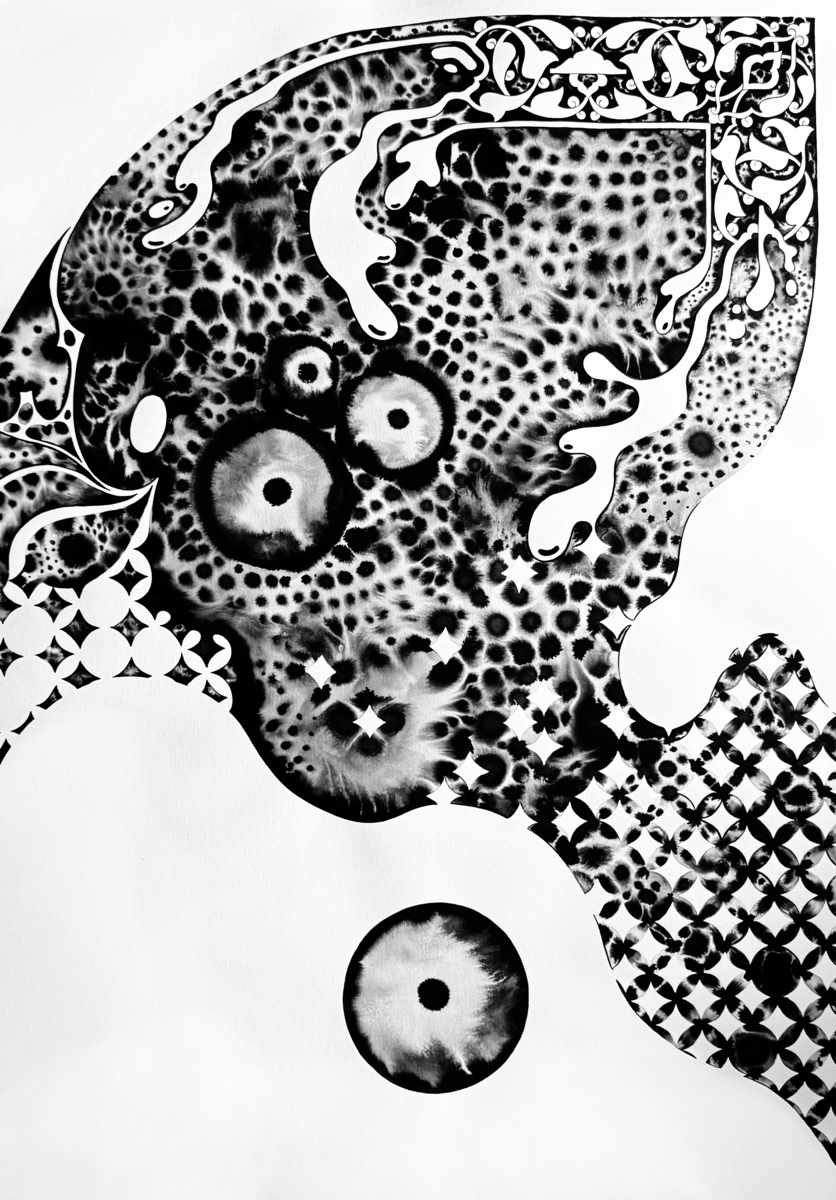
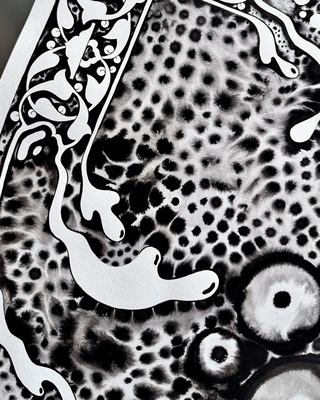
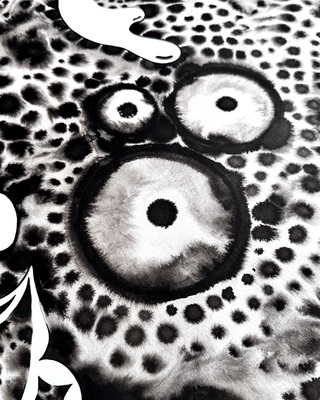
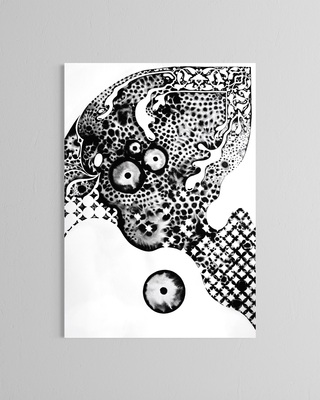
The Cosmos & Chaos Series addresses the process by which society and the individual construct their position through ever-new contexts, approaching it with a different mode of thought and production technique. In the series, traditional motifs exist as a "visual language" that points to familiar modes of production, established orders, and the tools through which power makes itself visible. These motifs dissolve, transforming into geometric or organic abstract forms that reference the accelerating, fragmenting, and constantly renewing process of the contemporary world. Even from a distance, it is clearly visible that the old has been broken, and that power, language, and forms of representation have taken on a new shape, transforming into different forms.
Elif Zaim' More From
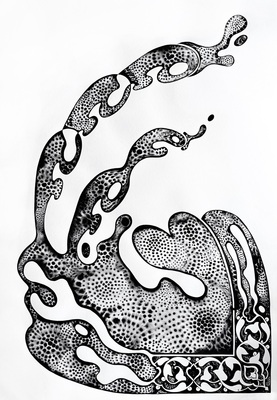
Cosmos & Chaos..
72 x 102 x cm
Elif Zaim
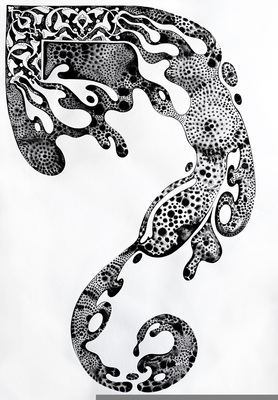
Cosmos & Chaos..
72 x 102 x cm
Elif Zaim
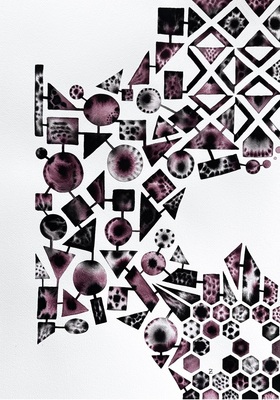
Family Tree..
36 x 50 x cm
Elif Zaim
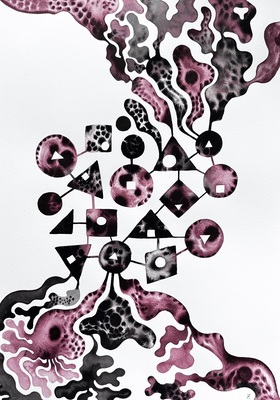
Genealogy..
36 x 50 x cm
Elif Zaim
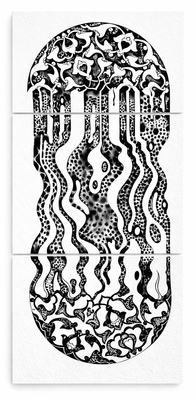
Coalition..
38 x 78 x cm
Elif Zaim
The works address the processes of "existing order – threshold / rupture – reconstitution" within a single composition. In the first phase, traditional motifs represent a fixed order; in the second phase, the threshold moment where the form begins to dissolve while still remaining legible. In the third phase, the dissolution does not remain a mere dispersal but instead generates a new rhythm and an entirely new order. Thus, the process ceases to be a fixed explanation tied to a single reference. It transforms into a state that circulates on the surface, continuously being reconstituted.
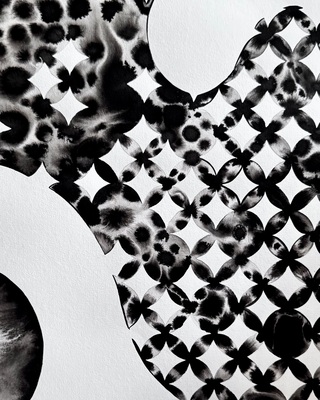
The production technique used in the works forms the foundation of what is being expressed. In the wet-on-wet technique, each drop of ink spreads according to its own flow. Each time, a new possibility and a new distribution emerge. My intervention is limited to establishing the ground and the boundaries within which this flow will take place. The ink moves independently of my consciousness, yet can only exist within the boundaries I consciously draw. This dilemma stands alongside the questions that have come to the fore today alongside large data networks and artificial intelligence. Is production without consciousness possible? What are its limits?
In the works, each drop of ink behaves like an individual. The encounters and juxtapositions of individuals constitute the composition — that is, the "social whole." Yet it is impossible to foresee how they will evolve or what form they will take. For this reason, Cosmos & Chaos exists not only through the totality of the work, but also through the production process itself.
Similar Artworks
Breathless..
21.5 x 14.5 x cm
Barış Gülen
₺ 35,000
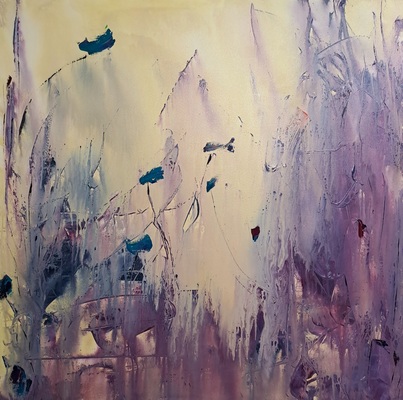
In the Depths..
100 x 100 x cm
Göknil Sarıoğlan
₺ 30,000
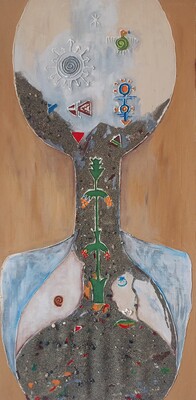
DEPLETION..
40 x 80 x cm
Asuman Sevdinli
₺ 25,000
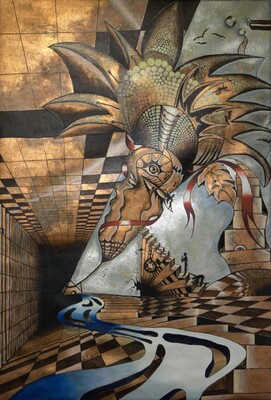
The Ritual..
85 x 125 x 5 cm
Erol Yıldırım
€ 15,000

COSMIC CYCLE..
350 x 282 x 4 cm
Gülten İmamoğlu