
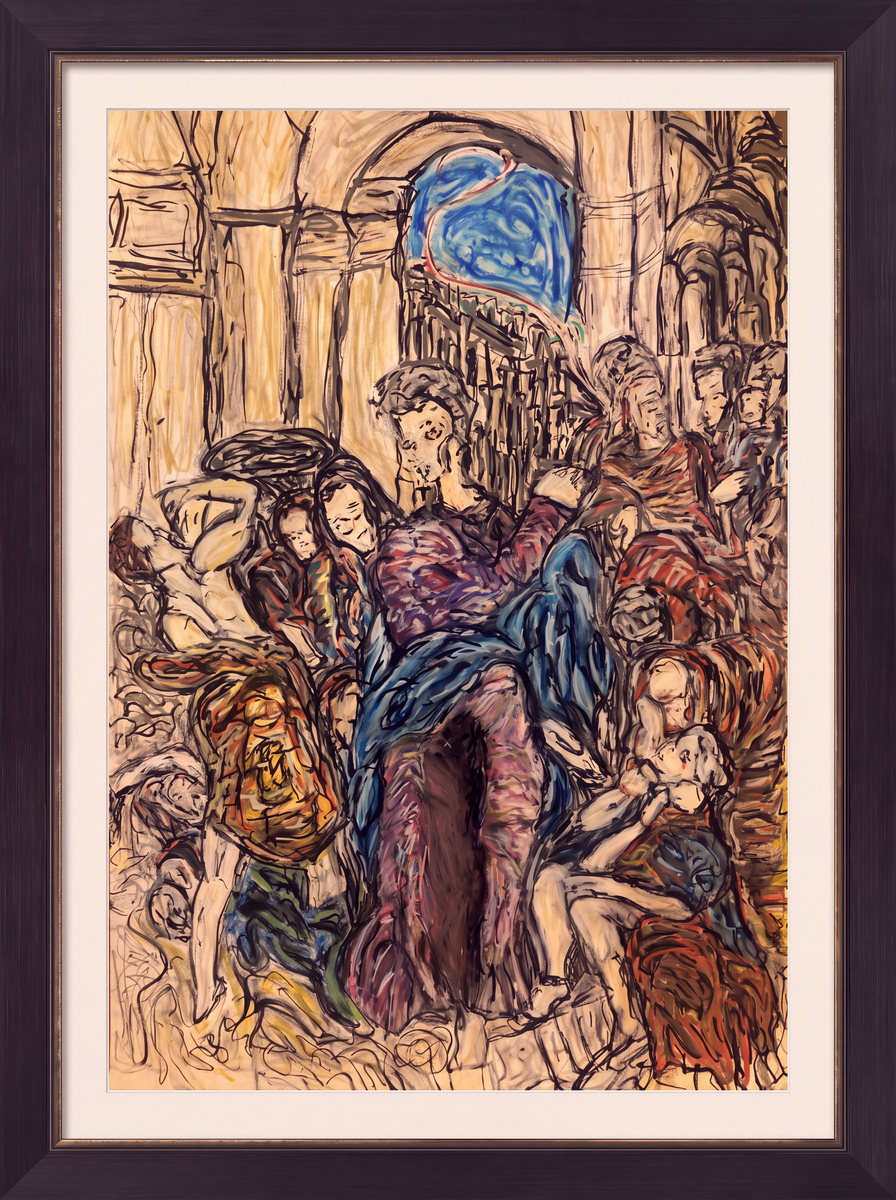
Jesus driving the merchants out of the temple
TR
Acrylic pen on paper
₺ 15,000
Ekim Mağden' More From
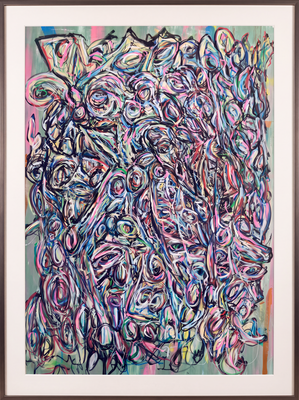
Pink Forest..
70 x 100 x 0.04 cm
Ekim Mağden
₺ 50,000
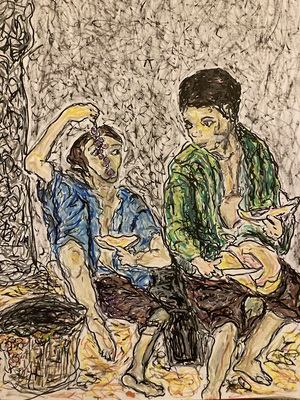
Children eating frui..
35 x 50 x cm
Ekim Mağden
₺ 3,000
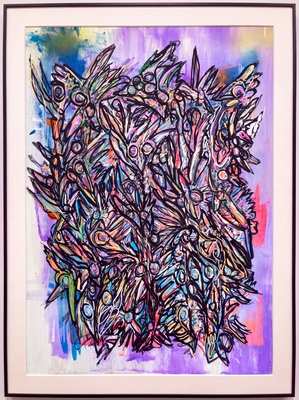
Birds..
70 x 100 x 0.4 cm
Ekim Mağden
₺ 55,000
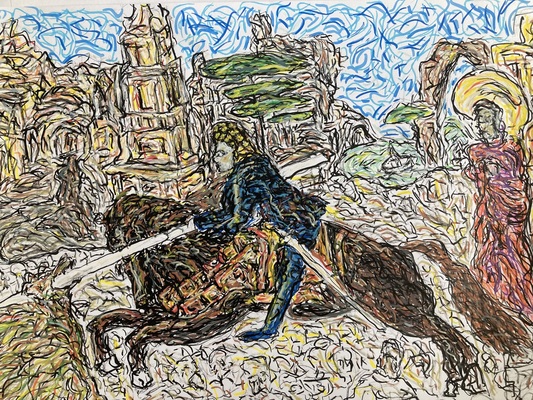
My dear dragon is go..
35 x 50 x cm
Ekim Mağden
₺ 10,000
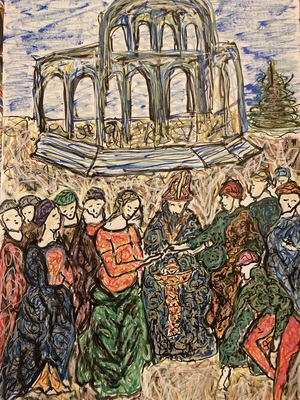
World House (Interpr..
35 x 50 x cm
Ekim Mağden
₺ 3,500
Rewriting Visual Memory
In this series, Ekim Mağden revisits classic compositions embedded in the collective memory of Western painting history through a contemporary language of line and mark-making. These images, ranging from religious narratives to everyday and secular scenes, are redrawn, disrupted, and transformed — freed from their fixed and canonized status as representations within art history.
The direct, rapid, and corporeal character of acrylic paint markers and tag pens creates a deliberate contrast with the controlled compositional sensibility of classical painting. Spontaneous lines, repetitions, layers, and intense color movements replace subtle painterly nuances. In this way, the images of the past are not merely copied; they are re-experienced through the visual language of the present.
For Mağden, art history is not a closed past but a visual archive that can be continuously reactivated. The images of classical masters function here beyond being mere "references" — they become sites of encounter between contemporary consciousness and historical memory. Particularly within religious iconography, the boundaries between the sacred and the everyday, between belief and representation, between individual perception and collective memory, grow blurred.
In this process of re-production, the artist breaks the authority of the classical work without destroying it. On the contrary, a new visual layer is added upon it. The original image and the artist's intervention continue to coexist on the same surface. For this reason, the works can be read as contemporary palimpsests built upon the past.
At the foundation of the series lies Mağden's approach to transformation and recontextualization, which recurs across different areas of his practice. Having previously brought together discarded objects, personal memory, and everyday materials in new contexts, the artist here applies the same method to art history itself. This time, what is being transformed is not a physical remnant but a cultural image.
The result is a hybrid visual field situated between classical painting, contemporary graffiti, and personal gesture. Familiar images retain their recognizability while simultaneously becoming estranged. This estrangement invites the viewer to encounter the work not only with the question "which classical painting does this reference?" but also with the question "how does this image operate anew within my own perception today?"
In this sense, the series is less an act of reproducing art history than an attempt to establish a new point of contact between art history and the visual consciousness of the present.
Similar Artworks
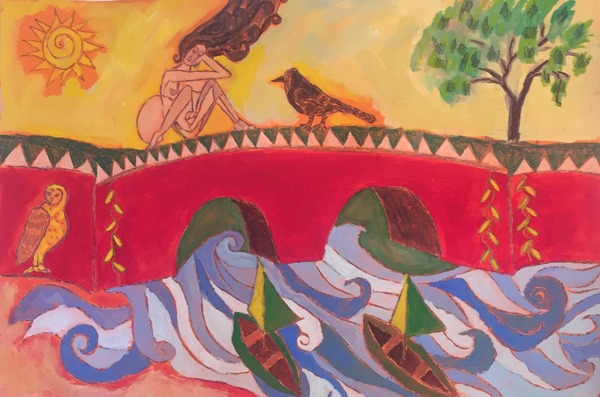
Conversation with th..
50 x 35 x 0 cm
Taç Bafra
₺ 8,000

Harlequin and Trapez..
59 x 89 x 1 cm
Ian Latham
€ 250
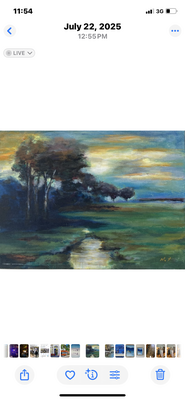
Peace..
40 x 30 x 1.5 cm
Nafize Bahçekapılı
₺ 5,000
Children eating frui..
35 x 50 x cm
Ekim Mağden
₺ 3,000

pines..
25 x 20 x 1 cm
AYTAÇ DUTKİN
₺ 3,500