
venus |
TR
this form reduces the body to a sign while making movement part of meaning. the figure on the upper surface is not fixed; through rotation, it renders continuity and transmission bodily visible.
•
this form reduces the body to a sign while making movement part of meaning. the figure on the upper surface is not fixed; through rotation, it makes the idea of continuity and transmission bodily visible.
$ 420
derin 𝘣̶𝘶̶𝘴̶𝘦̶ demirkaya' More From
non control..
2.2 x 2.7 x 0.5 cm
derin 𝘣̶𝘶̶𝘴̶𝘦̶ demirkaya
$ 150
I don't see any Turk..
x x cm
derin 𝘣̶𝘶̶𝘴̶𝘦̶ demirkaya
$ 110
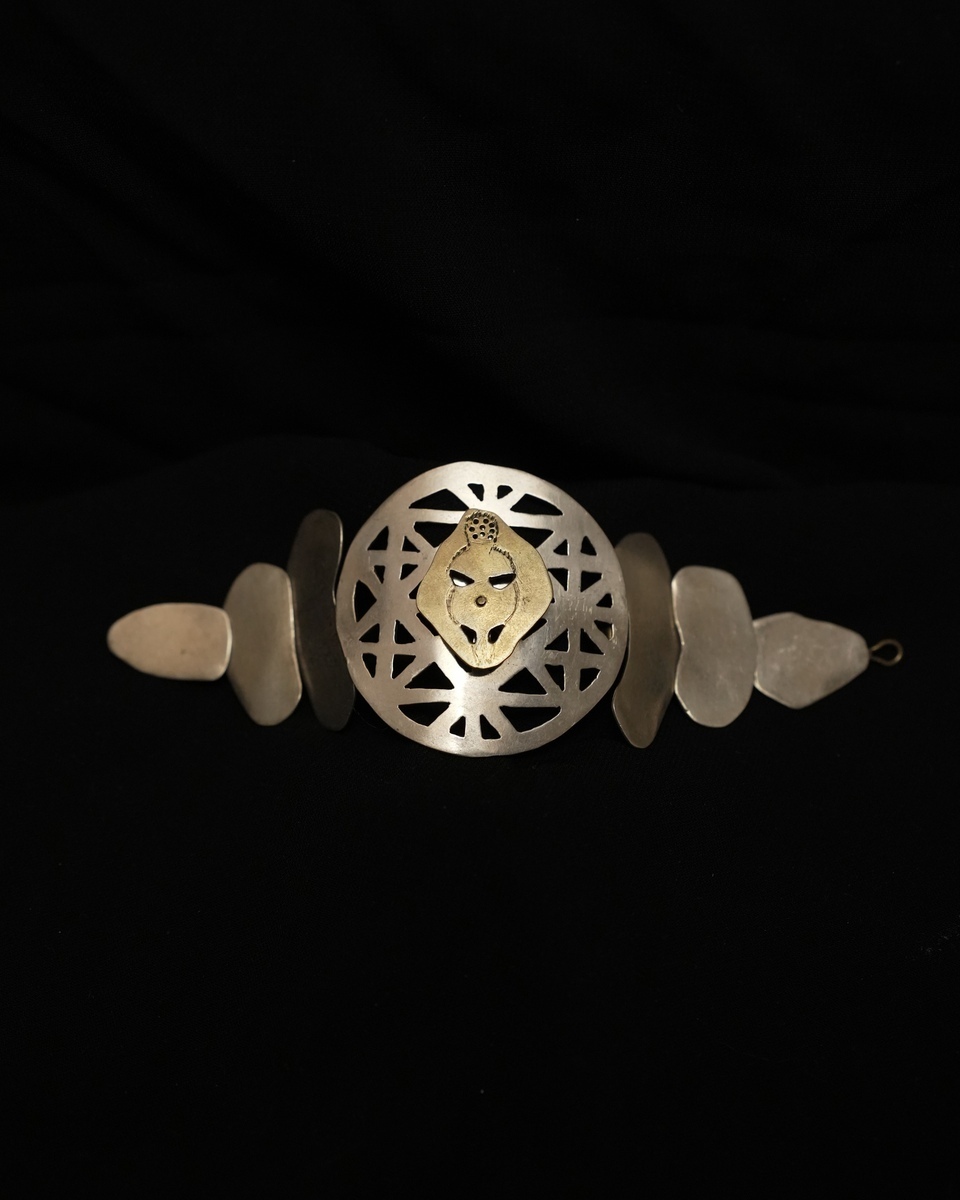
this piece takes shape through a reconsideration of prehistoric body imagery on a contemporary surface. the form concentrated at the center does not represent the body directly; it compresses, fragments, and reduces it to a symbolic plane. as volume recedes, meaning begins to form through surface traces, voids, and movement.
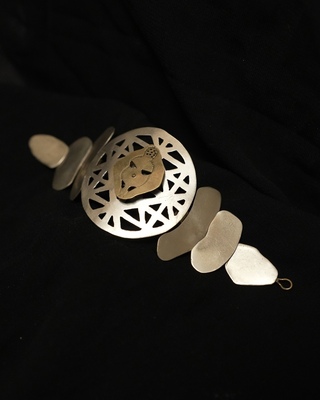
the figure positioned on the upper surface does not remain fixed; it rotates freely around its own axis. this motion removes the body from the state of a completed image and physically opens the idea of continuity. the form does not submit to a single viewpoint; each rotation reorganizes perception.
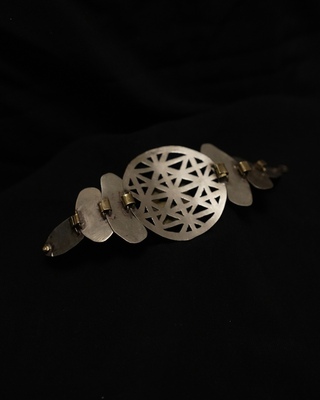
the perforated metal surfaces approach fertility not as a closed totality, but as a condition open to circulation. the voids are not acts of subtraction, but zones of transmission. the plates attached to the sides establish a suspended boundary between womb, armor, and jewelry.
the work does not romanticize the primitive. sacredness withdraws; the figure becomes anonymous. here, the body exists not as a possessed form, but as a memory surface in constant negotiation.
•
the piece takes shape through a reconsideration of prehistoric body imagery on a contemporary surface. the form concentrated at the center does not represent the body directly; it compresses, fragments, and reduces it to a symbolic plane. as volume recedes, meaning begins to be established through traces, voids, and movement on the surface.
the figure positioned on the upper surface does not remain in a fixed position; it rotates freely around its own axis. this movement takes the body out of being a completed image and physically opens the idea of continuity. the form does not surrender to a single viewpoint; each rotation reorganizes perception.
the perforated metal surfaces approach fertility not as a closed totality, but as a condition open to circulation. the voids are not subtraction but transmission areas. the plates articulated to the sides create a suspended boundary between womb, armor, and jewelry.
the work does not romanticize the primitive. sacredness retreats; the figure becomes anonymous. here, the body exists not as a possessed form, but as a memory surface in constant negotiation.
Similar Artworks
Heart Breaker..
60 x 100 x 0 cm
Elif Dinç
₺ 12,000