 Current
The History of the Gaze: Every Eye Looks from Somewhere
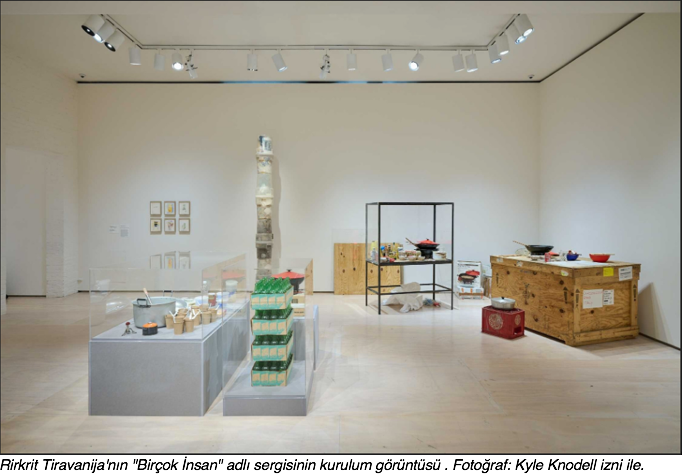
What exactly happens when you enter an exhibition hall? The white marble under your feet, the sterile whiteness of the walls, the calculated distance between the works, the security guard greeting you at the entrance - none of this is coincidental. They're all telling you something: Be serious here. Show respect here. Appear knowledgeable here. Before you've even looked at a single canvas, that space has already begun to shape you. Now ask this question: Is there such a thing as an unprejudiced gaze? "I only look at what I feel" is the most frequently heard and seemingly innocent phrase in the face of art. But it's also the most misleading one. When Clement Greenberg launched his project to bring art to "purity" in the mid-20th century, he was pursuing exactly this illusion. Purify art from narrative, politics, everyday life; let only form remain, only color and surface remain - then a "pure" aesthetic experience can be achieved. This was the formalist project. But what emerged in the end? An extremely rigid canon within itself. Abstract expressionism sat at the center, the New York art world determined global standards, a particular mode of production - a particular body, a particular geography, a particular class - was declared "universal". The pursuit of purity had produced one of history's most effective filters. Greenberg's formalism was not a cleansing, but a choice. And every choice is made from somewhere. John Berger made a four-part documentary for the BBC in 1972. His opening sentence is still sharp: "Seeing comes before words." But immediately after, he added: "How we see is affected by what we know." This sentence appears small, yet is revolutionary. According to Berger, the images produced throughout art history - especially the European painting...