
BANANA, TAPE AND $6.2 MILLION: THE LIMITS OF ART OR LIMITLESS COURAGE?
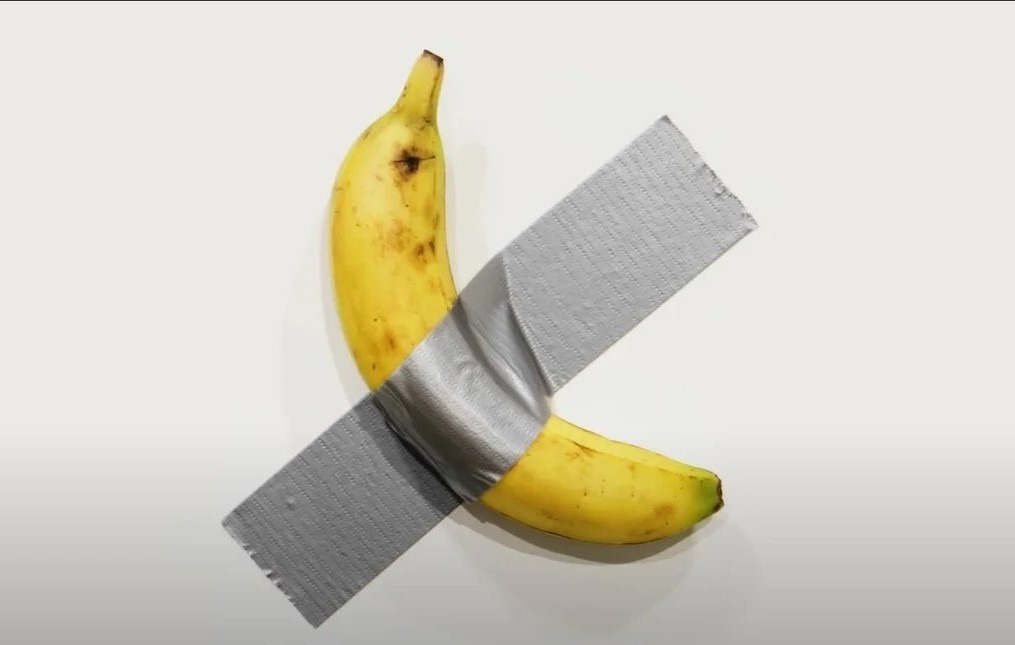
When Maurizio Cattelan's banana taped to the wall sold for $6.2 million, the art world once again asked its oldest question: "Is this art too?" But perhaps the real question should be: Why are we still surprised?
Fluxus's Legacy: The Rebellion That Started with a Matchbox
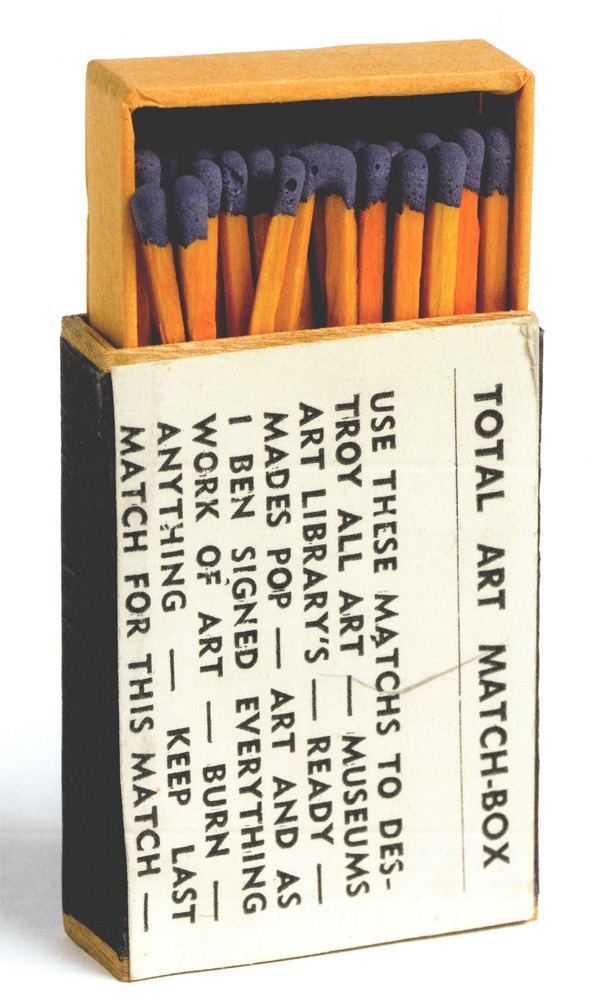
In 1966, Ben Vautier created a matchbox. The instruction on it was clear: "Use to burn all museums, libraries, pop art. Use the last match to burn this box." This wasn't just a provocation - it was a manifesto against art's crystallized value system.
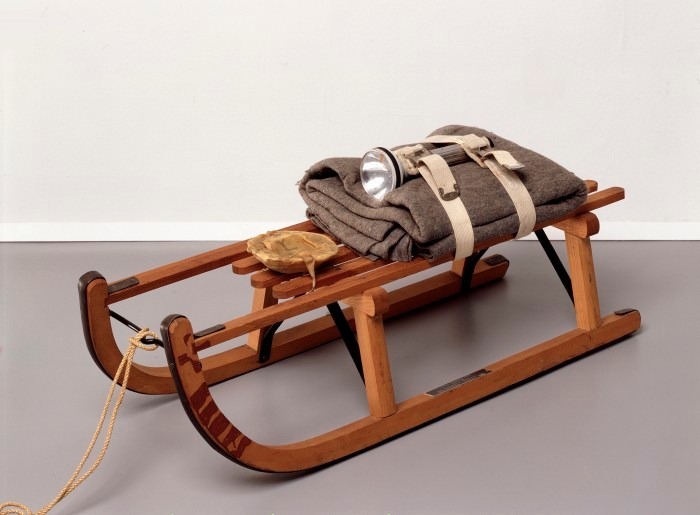
The Fluxus movement taught us this: Art cannot be reduced to the monopoly of canvases hanging on gallery walls. As Joseph Beuys said, "Every person is an artist" - because art is not making, but thinking and transforming. When Yoko Ono offered scissors to viewers asking them to cut her clothes, she was making art into an action; not a finished object, but the moment itself.
Anatomy of the Banana: 50-Cent Concept, Millions of Dollars Worth of Meaning
Cattelan's work is the child of this tradition. The banana costs 50 cents, the gray tape 10 cents. But the selling price is $120 thousand... Now it's $6.2 million. Absurd? Maybe. But that's exactly why it works.
The work asks us three things:
- Who determines the value of art, and how?
- Why is paint on a canvas valuable but a banana on the wall is not?
- Is art aesthetic or meaning?
It's no coincidence that crypto entrepreneur Justin Sun called it a "cultural phenomenon" when purchasing the work. Because the banana is no longer just a banana - it's a mirror of capitalism, the art market, and our perception of value. George Maciunas's goal of "liberating art from bourgeois diseases" has ironically come to life in the most bourgeois setting.
Manifesto of Transience: Decaying Art
Fluxus's most radical principle is transience. "Stand against stagnation," says Yoko Ono. Beuys adds: "Processes continue in my sculptures: chemical reactions, fermentations, decay. Everything is in a state of change."
Cattelan's banana does exactly this: It decays. It needs to be replaced. The work carries its own mortality within itself. This is not its weakness, but its strength. Because it challenges art's claim to immortality.
When performance artist David Datuna took the work off the wall and ate it in 2019, he actually became part of the work. To destroy is to create - exactly as Fluxus taught.
So, What's the Value of the Work at Collecist?
At Collecist, the banana costs 50 cents, the tape 10 cents. But the artist's idea? Priceless.
The traditional gallery system has reversed this equation: While intermediaries get rich, the artist's labor evaporates. Cattelan's work is precisely caricaturing this system - and the system buys it for $6.2 million. Irony or tragedy? Both.
Staying true to the Fluxus spirit, Collecist suggests this: Let the artistic action and idea be in the foreground. Let the value be within the work - not in the speculation of auction houses. Because in the end, the banana on the museum wall will decay just as much as the banana in your kitchen.
The only difference is: We talk about one, we eat the other.
"Art should change life, not just be exhibited." - Fluxus manifesto