

The History of the Gaze: Every Eye Looks from Somewhere
What exactly happens when you enter an exhibition hall?
The white marble under your feet, the sterile whiteness of the walls, the calculated distance between the works, the security guard greeting you at the entrance - none of this is coincidental. They're all telling you something: Be serious here. Show respect here. Appear knowledgeable here. Before you've even looked at a single canvas, that space has already begun to shape you.
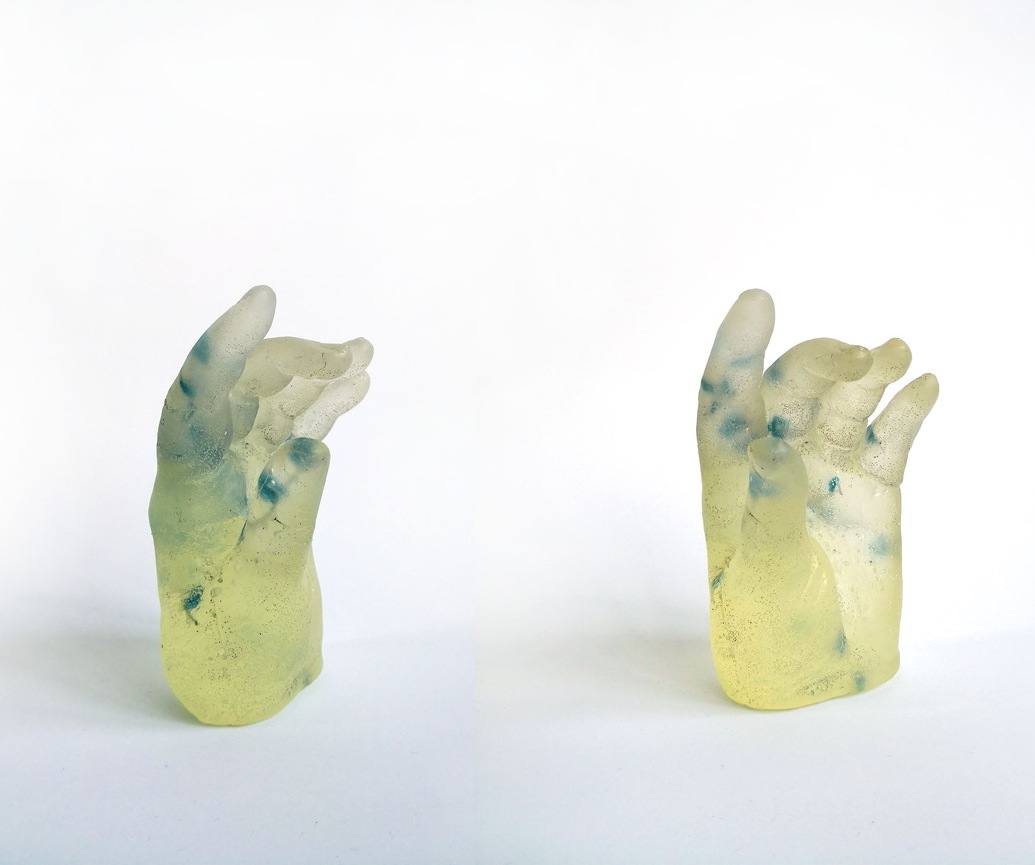
Now ask this question: Is there such a thing as an unprejudiced gaze?
"I only look at what I feel" is the most frequently heard and seemingly innocent phrase in the face of art. But it's also the most misleading one.
When Clement Greenberg launched his project to bring art to "purity" in the mid-20th century, he was pursuing exactly this illusion. Purify art from narrative, politics, everyday life; let only form remain, only color and surface remain - then a "pure" aesthetic experience can be achieved. This was the formalist project.
But what emerged in the end? An extremely rigid canon within itself. Abstract expressionism sat at the center, the New York art world determined global standards, a particular mode of production - a particular body, a particular geography, a particular class - was declared "universal". The pursuit of purity had produced one of history's most effective filters.
Greenberg's formalism was not a cleansing, but a choice. And every choice is made from somewhere.
John Berger made a four-part documentary for the BBC in 1972. His opening sentence is still sharp: "Seeing comes before words." But immediately after, he added: "How we see is affected by what we know."
This sentence appears small, yet is revolutionary.
According to Berger, the images produced throughout art history - especially the European painting tradition - normalized a particular gaze: the gaze of a property-owning, male, Western subject. The female figure became the object of this gaze; exotic geographies became this gaze's fantasy. The viewer was conditioned to identify with that subject, to see through his eyes.
So does that conditioning continue today?
More importantly: Does recognizing this mean being freed from it?
No. Recognizing it only means standing at a more honest point. Knowing the history of the gaze doesn't mean being exempt from that history, but at least not getting lost within it.
Arthur Danto asked this question in 1964: What's the difference between Andy Warhol's Brillo box and the Brillo box in the supermarket?
Visually, almost zero. But one is art, the other is packaging.
Danto's answer was the concept of "artworld": What makes an object art is the institutional and discursive framework woven around it. Gallery, museum, critic, curator, collector, biennial - all of these are parts of that framework. Without the framework, art becomes invisible; more precisely, it becomes invisible as art.
This observation is disturbing because it implies: A work being considered "good" or "important" may be related not to its intrinsic value but to its access to that framework.
Who draws the framework? Who remains outside the framework?
The contemporary art world passes every work through three major filters.
The first is the market. Auction results rewrite art history. When an artist's work sells for a record price, that artist's importance also increases retrospectively. This cycle produces its own reality: valuable because expensive, expensive because valuable. The work that cannot pass through this filter is not doomed to invisibility, but must walk a much more arduous path to be seen.
The second is institution. Biennials, state-supported museums, prestigious galleries - these are gatekeepers. The artist who passes through the gate becomes legitimized; the one who cannot, no matter how original, starts one step behind. This boundary has been shaken in the last twenty years: digital platforms, independent spaces, artist initiatives have opened alternative channels. But the mainstream is still strong.
The third is discourse. Which language, which conceptual framework, which theoretical reference is considered valid? The artist and work that can speak within a certain intellectual tradition gain acceptance faster than those outside that tradition. This is sometimes related to geography, sometimes to education, sometimes to language, but it always creates a division.
When the three filters work together, this emerges: The work that the art world finds "valuable" is mostly the work that has been able to pass through these three channels. It's not possible to say that what cannot pass is worthless. It's just invisible.
There's another matter that requires honesty.
In recent years, a strong trend has emerged in the art world: a conscious effort has been made to make visible art from marginalized identities, works by historically excluded voices, and artists previously ignored in earlier periods. This is a legitimate and necessary correction.
But some critics have begun to ask a valid question: In this process, is it the work itself that comes forward, or the artist's identity? The two sometimes take each other's place. When identity becomes the evaluation criterion itself - that is, when not the work but identity is made "valuable" - this too is a prejudice. Its direction has reversed, but its structure is the same.
Truly overcoming prejudice begins with being able to distinguish between these two: The question "Who is speaking?" and the question "What is being said?" should be asked simultaneously and separately.
Collecist's stance necessitates a confession.
Collecist is also a filter. Every platform is a filter; no exhibition ground is neutral. How artists are included on the platform, how works are presented, which contents are highlighted - all of these are choices. And every choice is made from somewhere.
But the difference is here: Between denying the filter and keeping the filter transparent.
The gallery system hides its filter - operates it in the name of "quality," but doesn't say who defines quality. The market presents its filter as if it were a natural economic law. Institutions transmit their criteria, mostly unquestioned, for generations.
Collecist's claim starts from a different place: Remove the intermediary, connect the artist directly to the collector. Work commission-free. Eliminate the obligation to wait for the gatekeeper's approval to be included in the system.
This is not being unprejudiced. It's trying to make prejudice visible.
When the gallery system ignores an artist, that decision is mostly made silently and its rationale is never explained. On Collecist, an artist is there or not, and this situation is directly in front of the viewer, with that artist's works.
Of course, this isn't a perfect framework either. But it's a more honest starting point.
Every eye looks from somewhere - it's not possible to change this.
But it's possible to ask where the gaze comes from. Asking that question is a responsibility that the viewer, the artist, and Collecist as a platform can all take on.
Greenberg wanted purity, but created a canon. Berger said the gaze was learned, and he was right. Danto showed the power of the framework, and disturbed. These three critics said very different things from each other, but the same question lies beneath all of them:
For whom are we seeing art?
Collecist's answer doesn't have to be simple. But it has to be honest.
Perhaps the most powerful institutional position is this: "We know we don't see correctly. But we're trying to see more."
Collecist: Art's Quiet Space
To hear every voice, we first learned to lower our own.