
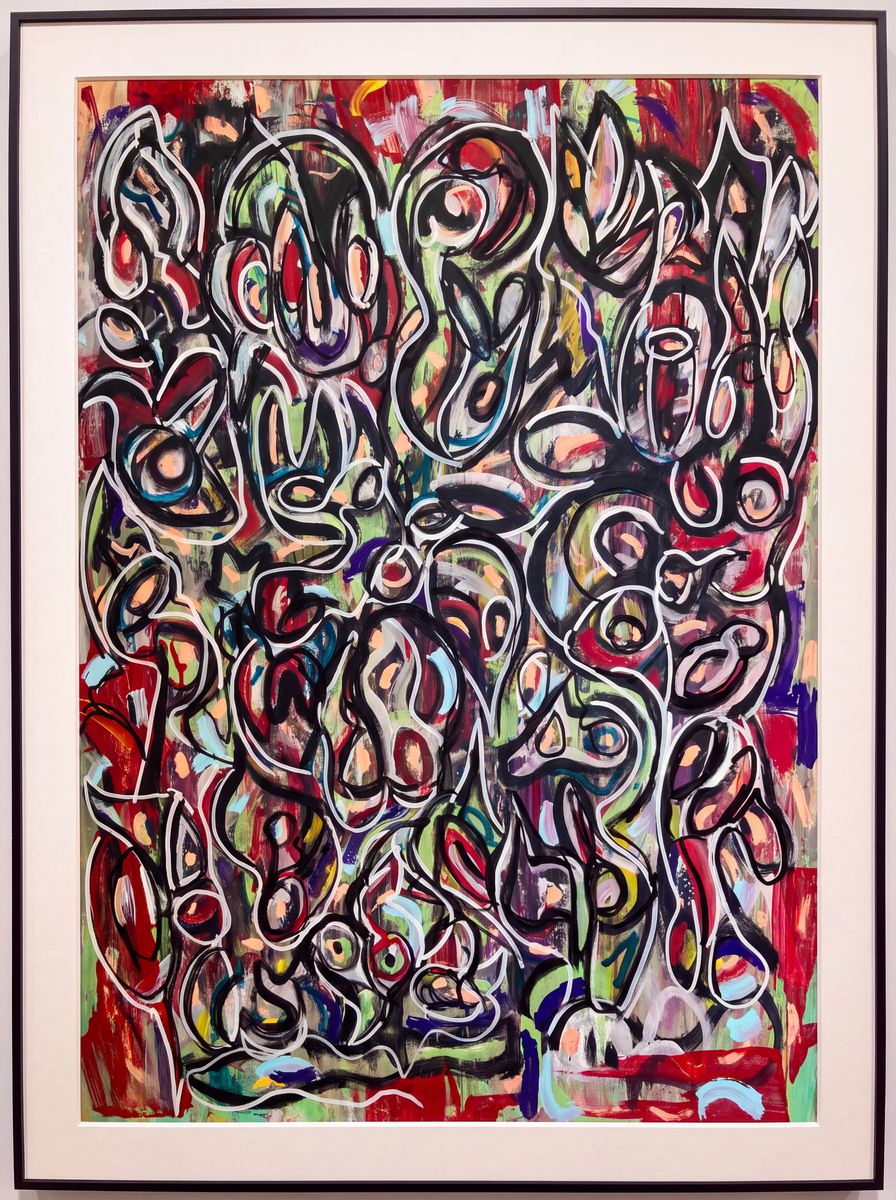
Eared / With Ears (or "Lugged" depending on context)
TR
Acrylic on wooden panel
₺ 55,000
Ekim Mağden' More From
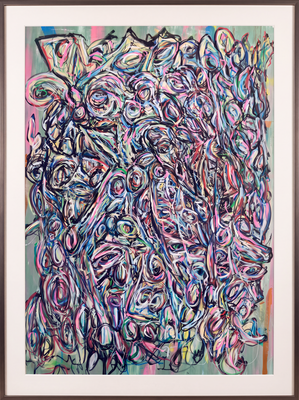
Pink Forest..
70 x 100 x 0.04 cm
Ekim Mağden
₺ 50,000
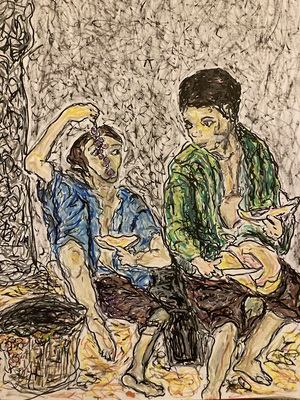
Children eating frui..
35 x 50 x cm
Ekim Mağden
₺ 3,000
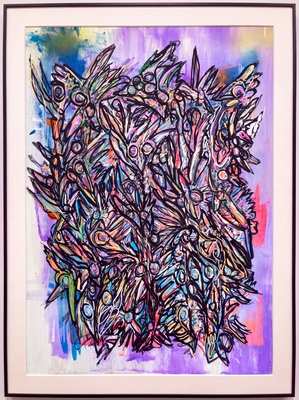
Birds..
70 x 100 x 0.4 cm
Ekim Mağden
₺ 55,000
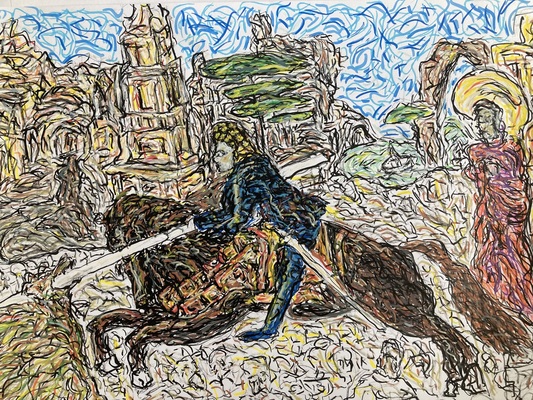
My dear dragon is go..
35 x 50 x cm
Ekim Mağden
₺ 10,000
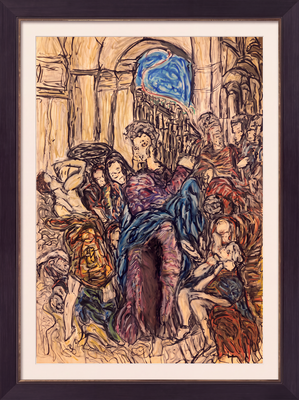
Jesus driving the me..
35 x 50 x cm
Ekim Mağden
₺ 15,000
ABSTRACT GRAFFITI
These figurative works, which I call Abstract Graffiti, constitute a painting practice that investigates the relationship between gesture, body, repetition, urban surface, and visual identity. The works reconstruct on wooden panel a visual language belonging to public space, by bringing graffiti's direct and personal act of marking into dialogue with painting's historical understanding of gesture.
The surfaces I create with acrylic paint on wooden panels are treated not as the background of a single image, but as layered and continuously transforming palimpsests. The overlapping of different colors, their covering, revealing, and partially erasing one another evokes the visual memory of urban walls that have been painted over, worn away, and rewritten countless times. The surface thus ceases to be the passive ground of painting; it becomes an active field that carries its own past, upon which new marks are added.
The acrylic tag marker I use on this surface removes the line from being merely a contour. While tracing the boundaries of figures, I follow the continuity and rhythm of a tagging act by lifting my hand as little as possible. I do not "draw" predetermined figures in the traditional sense; I establish a direct relationship between the movement of the hand and the emergence of the figure. For this reason, the line is, before anything else, a bodily trace, a record of gesture and action.
This approach enters into dialogue with Jackson Pollock's understanding of gesture—which transforms the painting surface into a field of bodily movement—and with the historical legacy of Jean-Michel Basquiat's street-derived language of signs, text, figures, and direct drawing. However, the aim here is not to reproduce these artists' visual languages, but to rethink the shared performative roots of abstract expressionist gesture and the graffiti tag within a contemporary figurative system.
As the line repeats, the figures multiply. Faces, bodies, and organic forms that emerge side by side, overlapping, and interlocking with one another are never exactly identical. Figures that derive from one another behave like variations and visual mutations. The singular figure gradually loses its importance; in its place appears a collective body, an anonymous crowd, or an organism that multiplies within itself. The convergence of forms evoking the human and the animal in particular renders the fixed and definite boundaries of identity even more ambiguous.
Here, the "signature" quality of graffiti also transforms. A tag is normally the act of making the artist visible in public space, of saying "I was here." In my practice, however, this personal mark multiplies as it repeats, becomes the boundary of the figure, and ultimately begins to dissolve individual identity within an anonymous visual crowd. The signature transforms from identity into pattern; from pattern into body; from body back into a mark.
The colored, patternless field I leave around the compositions creates a second context for this transformation. This field, functioning like a kind of mat, implies a fragment of a wall severed from the street, or the reframing of a public surface within the gallery. The work thus positions itself on the boundary between public space and institutional art space, between the free mark and the framed art object.
Abstract Graffiti, in this sense, goes beyond being a series that transposes graffiti aesthetics into painting. The works investigate how gesture produces identity, how repetition transforms individuality, and how the marks left on a surface become a form of visual memory.
The figures that ultimately emerge are neither purely portraits nor purely patterns. They are visual organisms formed through the layering of body, mark, memory, and movement. Painting here transforms from the representation of an image into the record of a continuous process of becoming that unfolds upon a surface.
Similar Artworks
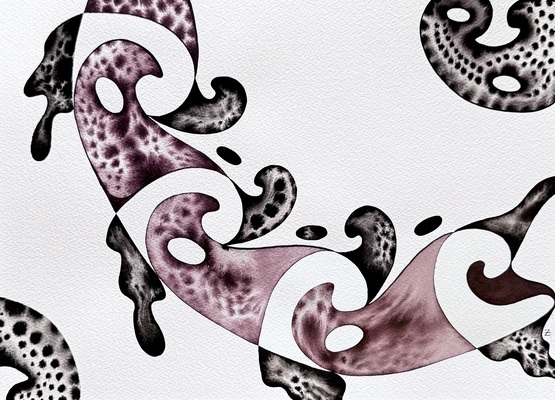
Micro Loop..
36 x 26 x cm
Elif Zaim
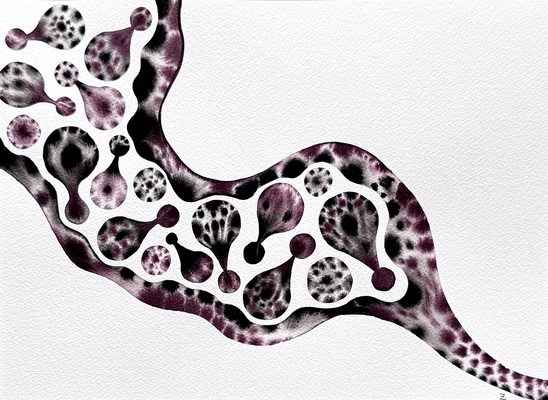
Reproduction..
36 x 26 x cm
Elif Zaim
Pink Forest..
70 x 100 x 0.04 cm
Ekim Mağden
₺ 50,000
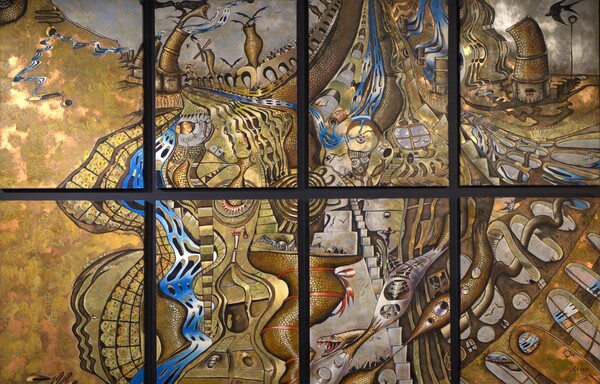
The water flows find..
240 x 160 x 5 cm
Erol Yıldırım
€ 70,000
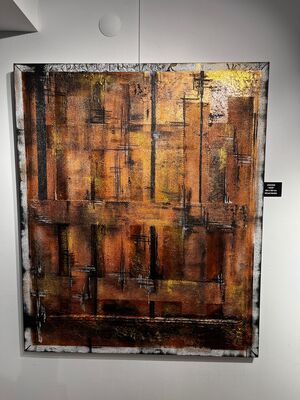
Lessons..
100 x 120 x cm
Merve Uçar
₺ 40,000