
Art Notes - Interview with F. Neriman Şairoğlu
2026-03-26 – 2026-04-09
COLLECIST · ART NOTES
Interview with F. Neriman Şairoğlu
The Courage Behind Torn Surfaces
Interview Conducted by: Emin Kadıoğlu
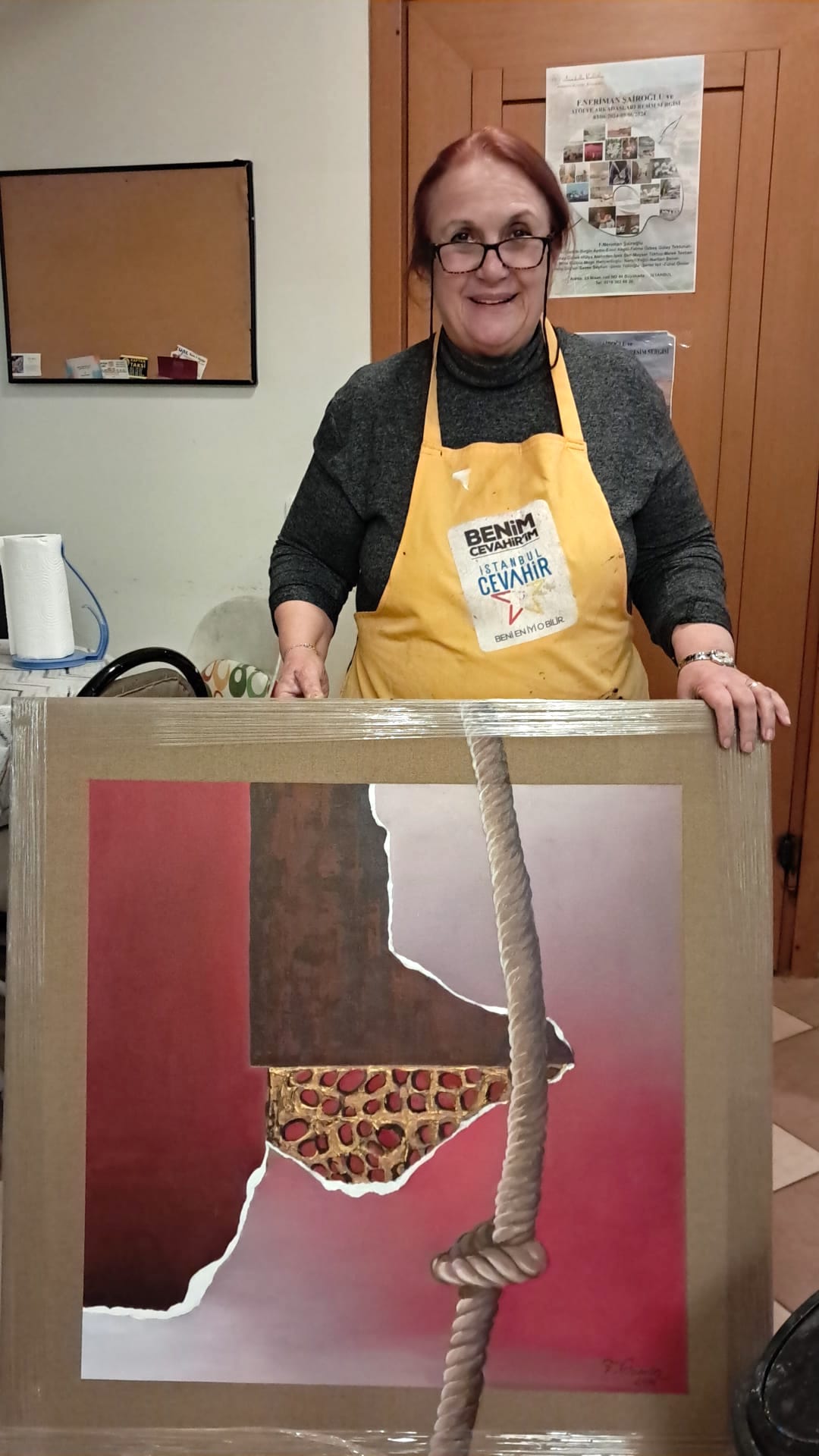
Neriman Şairoğlu is an artist who has never hesitated to test the boundaries of abstract painting throughout her artistic journey spanning over thirty years. Viewing the canvas not merely as a surface but as an archaeological field where emotion and memory are excavated and revealed, Şahiroğlu has constructed an original language born from the tension between red and black. She founded Pura Art Gallery in Caddebostan in 1996, has been conducting uninterrupted workshop sessions since 1997, and has represented Turkish art in international exhibitions and symposiums. In this interview, we discussed many topics from her first touch on canvas to the cyclicality of life, from her gallery experience to her perspective on the digital age.
The Grammar of Red, The Silence of Black
Red and black have almost become a signature in your works. What does using these two colors together mean to you?
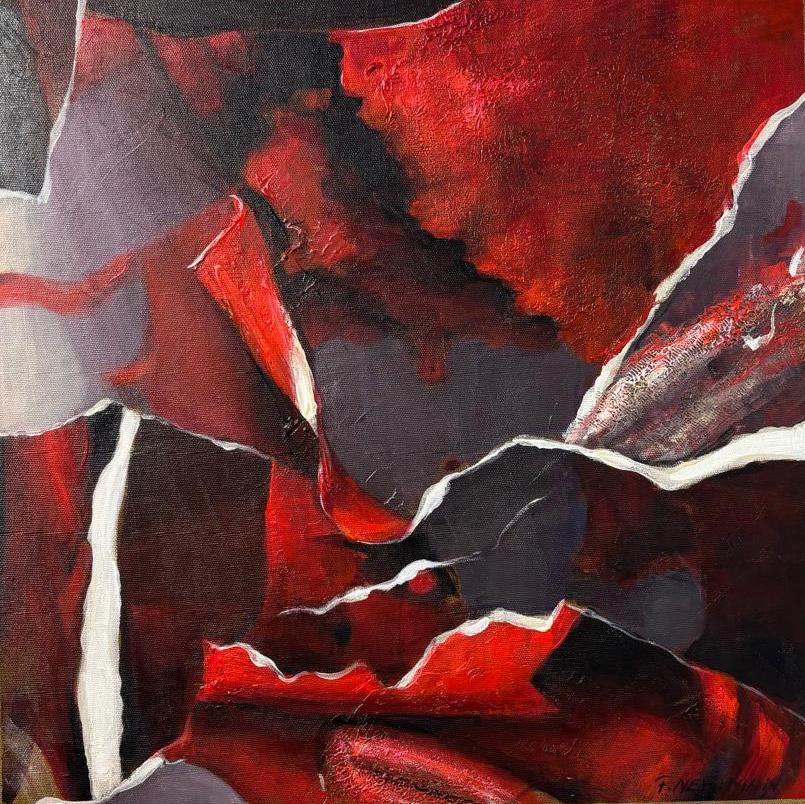
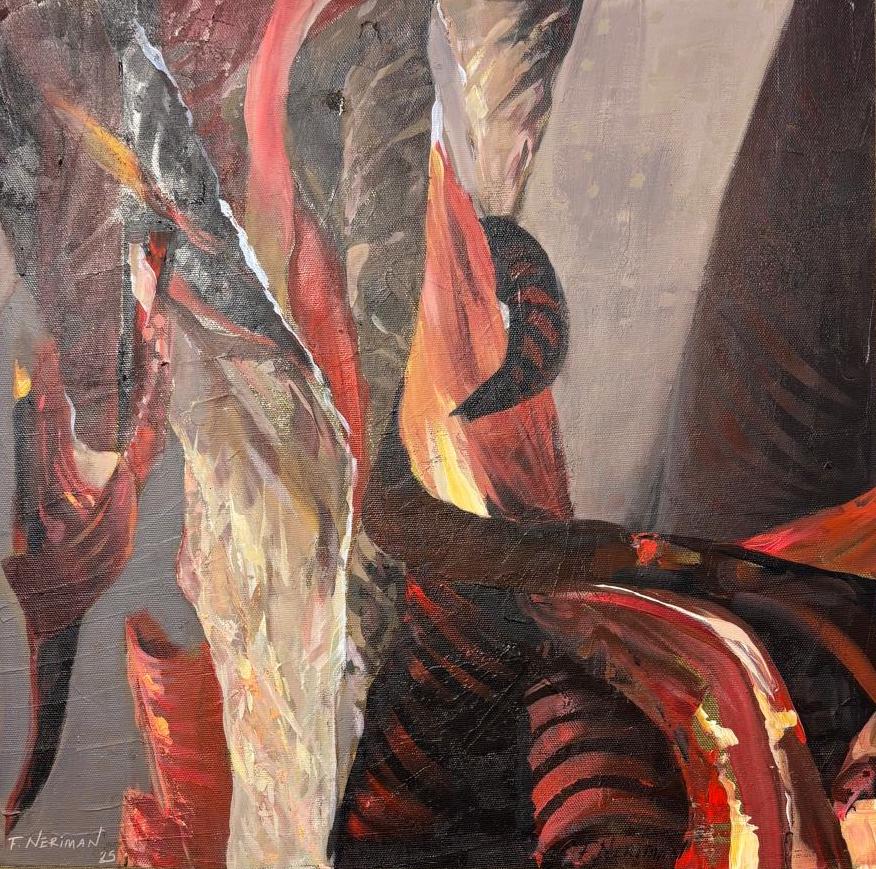
I really enjoy the tension between these two colors. I'm an Aries; fire, movement and leadership are in my nature. Red means fire and war to me, it means blood. Black is death. So actually life and death together... I believe one is the previous step of the other. It's a cyclical relationship: everything goes up, something happens, it renews, it cleanses and comes back down again.
Do you have a special memory with red? What draws you to this color?
I don't have a special memory, but red suits my character directly. I'm an excited person, you must have noticed. Even while talking here, I'm excited. Red carries this excitement. I always buy lots of red paint, this color attracts me. The color that shows red best is black. White competes with red, but black embraces it.
What about the whites you apply on top?
The whites I apply over red and black are called rhythm. Nothing lives in a painting without rhythm.
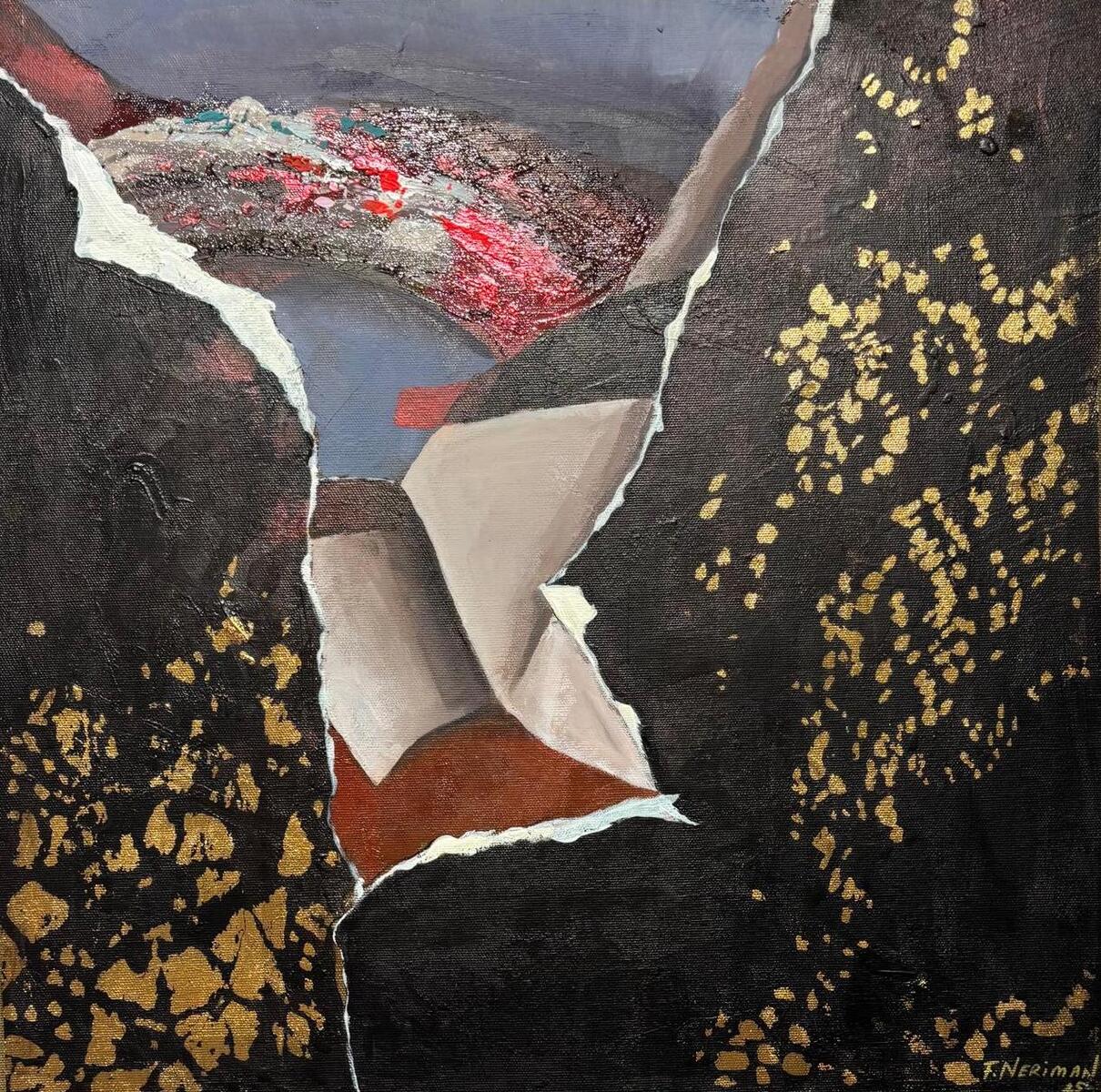
Tearing Canvas: The Archaeology of Memory
Painting is a surface art. Yet you want to tear through that surface. Why?
I'm searching for depth. I want the painting to pierce through the wall. I'm searching for the third dimension. That's why I tear when necessary, I bring it forward when necessary, I cover when necessary. The moment I intervene with the surface, I use all possibilities to capture the third dimension I'm searching for.
What happens in your mind at that moment of intervention?
When I do this, I step out of my Neriman identity. Only hand and eye remain. Wherever the hand and eye take the painting, that's where it goes. Then I make the necessary corrections, I adjust how the rhythm should be according to that. So everything happens directly under the command of my emotions.
Could this tearing come from childhood?
I come from a patriarchal family. I'm the daughter of an authoritarian father. I'm not someone who can manage to argue. I could say that I tear apart the things I want to rip, destroy and shred inside me here, on the canvas. These are traces from childhood; no matter how much you scrape, they stand there like stains.
Cyclicality and Symbolism: Forms Rising to the Sky
You believe in cyclicality. How do you carry this into your paintings?
Nothing is lost in the world. It goes to the sky, gets deformed, undergoes change and comes back to us. Something keeps circulating between earth and sky, like the soul, like its cleansing. I try to capture this cycle in my paintings. There are Freuds in it, there are devils, there are wars... Everything is there.
Namelessness: The Space Left to the Viewer
Most of your works carry the title 'Untitled'. Why?
This is a conscious void. Not giving a name to a work means not directing the viewer. Since I work abstractly, the work is when my state of mind hits there and comes to you. Our state of mind is always changing. Sometimes we really like a warm color, sometimes we get lost in a cold color. Since it changes, I didn't want to squeeze the work into a name either.
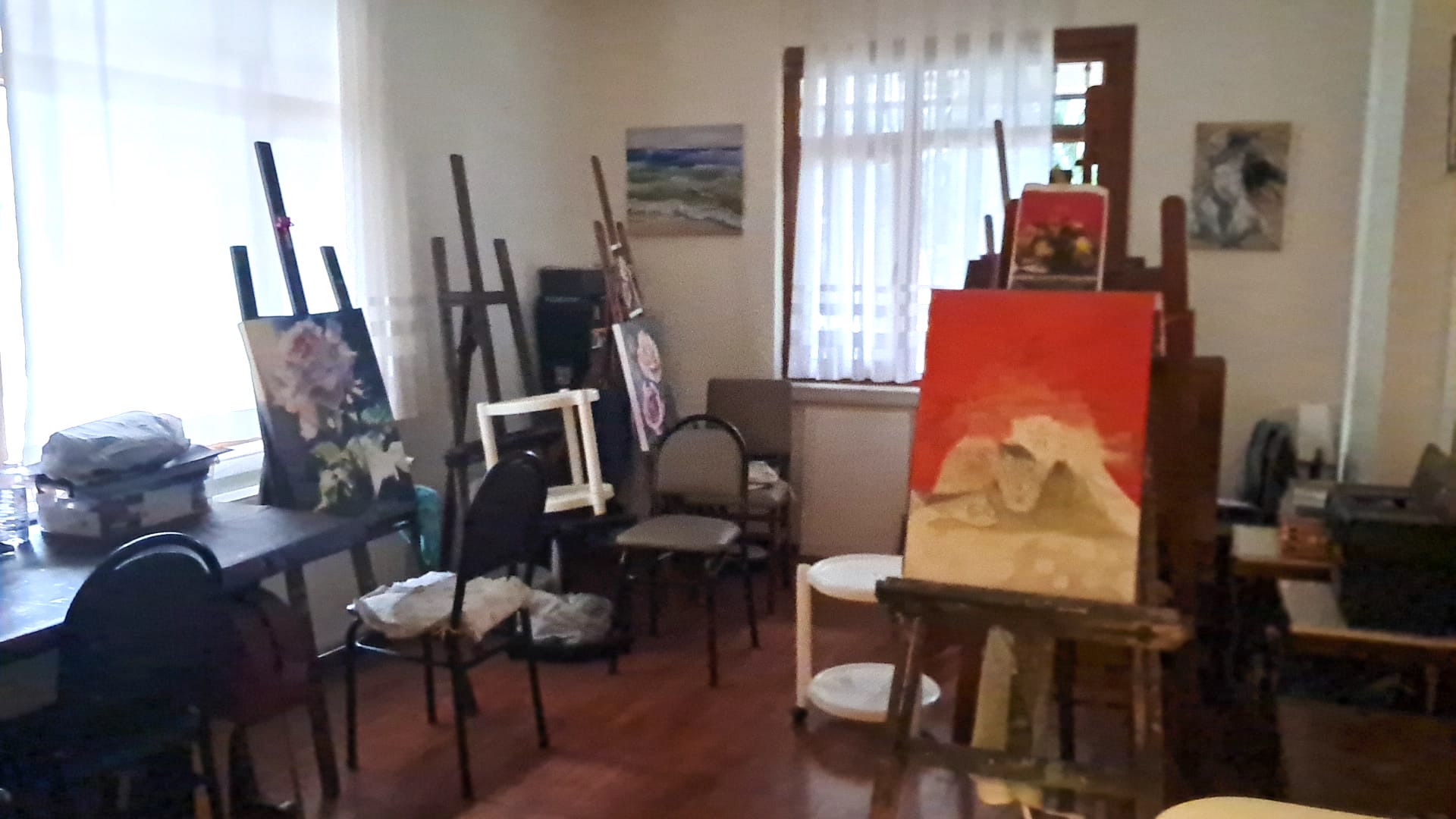
You've been running workshops continuously since 1997. What's the most fundamental thing you convey to your students?
You will be original, you will be sincere and you will be honest towards your work. You will produce work that you would hang in your own home. I don't allow shoddy work to come out of here. This process should also be seen as the adventure of 30 years of effort. The experience accumulated over the years, the energy and desire to produce of students who have passed through the workshop, has transformed this process from being just an educational space into a living environment of sharing and development. Every new work, every new student and every new idea became small but valuable steps that reminded us that this journey continues.
Looking back today, this process can be seen not only as the story of producing works, but also as the story of a journey that grows through thinking together, learning and the sincerity of art.
How has teaching nourished your art?
I'm a person with very high empathy. I love entering minds and creating art there. After three lessons, I understand which path a student will walk on. Everyone has a story to tell, a taste. I get to know that person and draw a path accordingly. I'm accurate every time; the student says 'This is what I was looking for' and runs off with it.
How do you maintain such a long-term bond?
Painting and art are infinite. One must wander within infinity. Every day is a new day, every day a new light. Every day something hurts us, every day we see a little more beautifully. All of these can be material for painting. I scatter what I experience and see around me; these things I scatter don't leave my side.
Technique: When Does a Work End?
Paint texture is very strong in your works. How do you work on canvas?
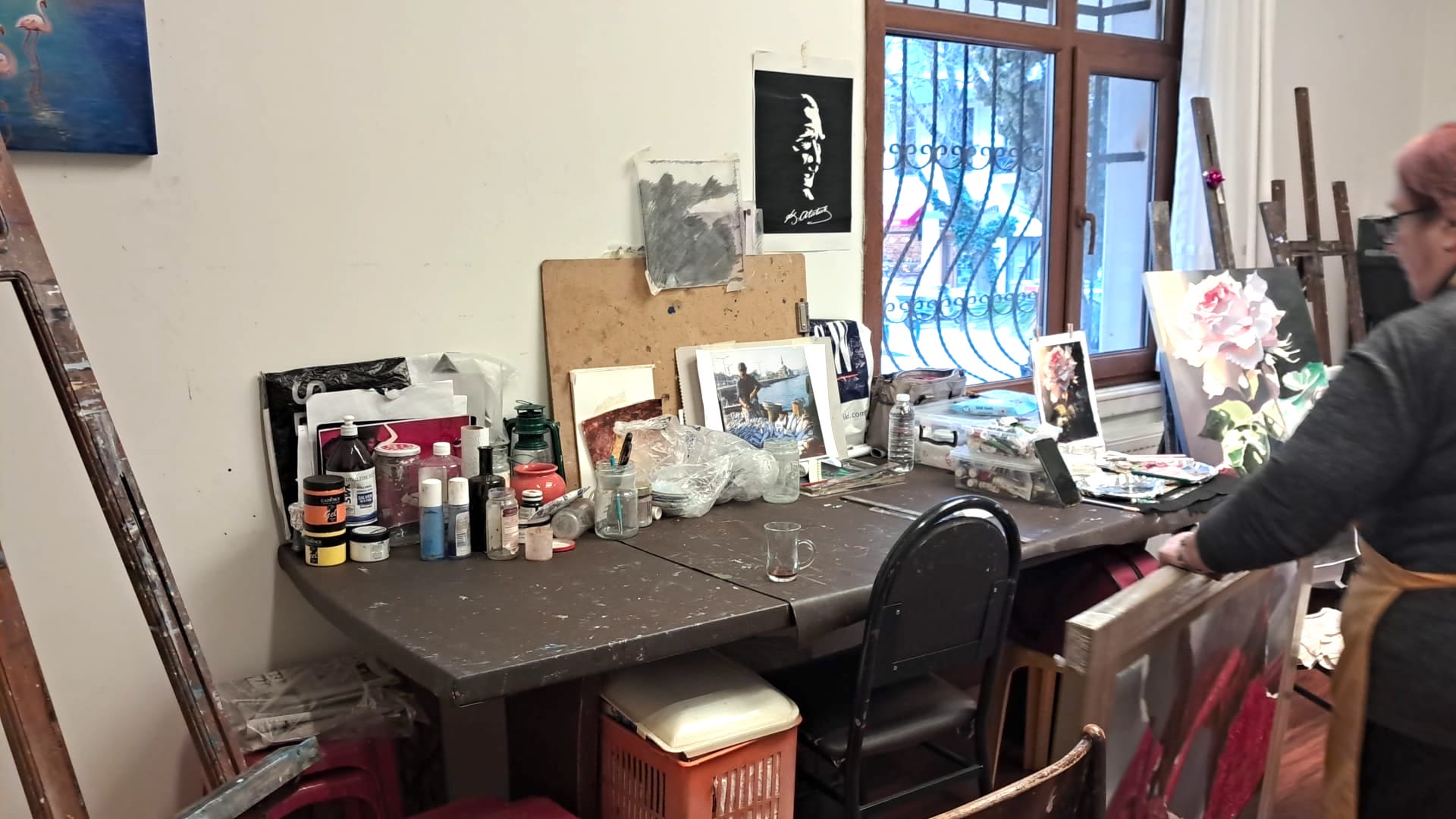
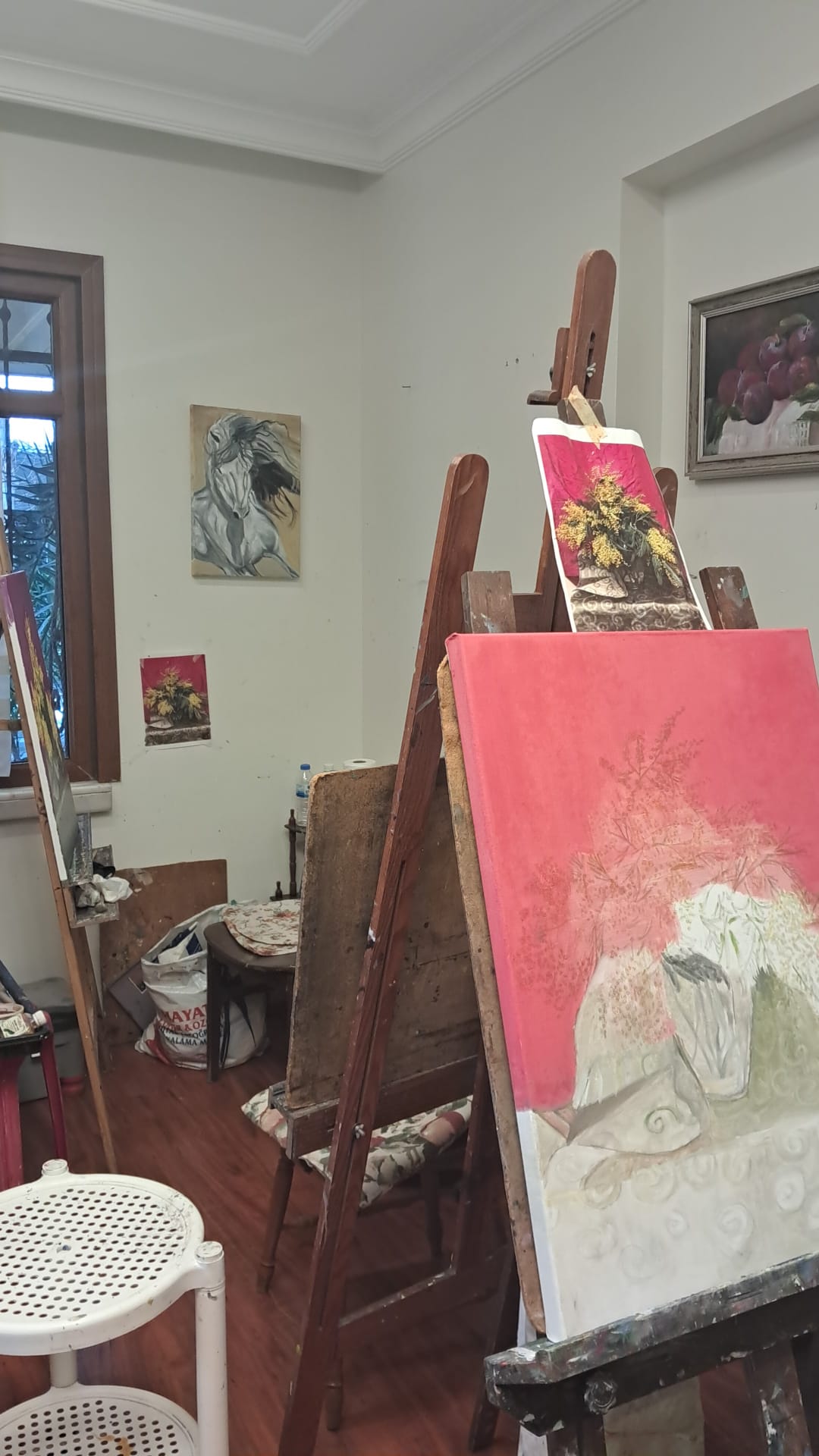
This is a thirty-year-old workshop; everything related to painting is here. From wiping technique to texture varieties, from glazing technique to underpainting. Watercolor, oil paint, acrylic... But here one work comes from one person, a single work. Everyone's work is unique to themselves.
How do you know when a work is finished?
I look at three things. First, whether the light-dark-medium balance is correct. Second, whether the elements that should come forward have come forward enough. Third, whether there's anything left to add on top. If it's zero, it's finished. All three need to be together.
Between Abstract and Concrete: In Pursuit of Originality
You use an abstract language but there are traces of nature, fabric, organic forms in your works. How do you balance this?
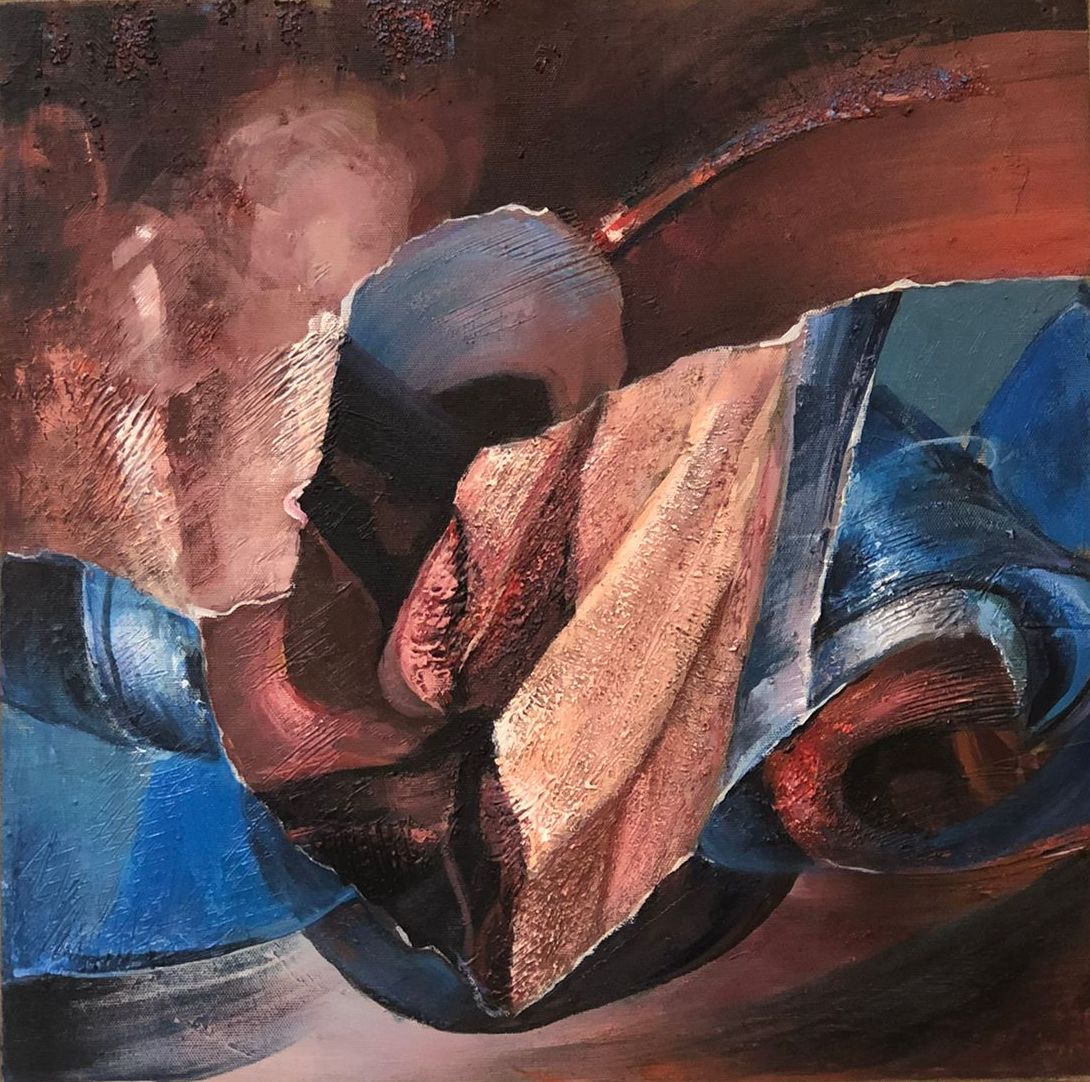
In abstract painting, depth, the effect of color and heartbeat are very important for me. The natural forms' own internal movements in the transitions between colors help me. The fabric's own internal movement, its wave-like flow... It doesn't work when I paint it flat, I don't want that. When it's like this, my emotions come: sometimes down, sometimes up. Painting is a two-dimensional art but I'm searching for the third dimension there. The further back it goes, the more layers it has, the more valuable it is for me.
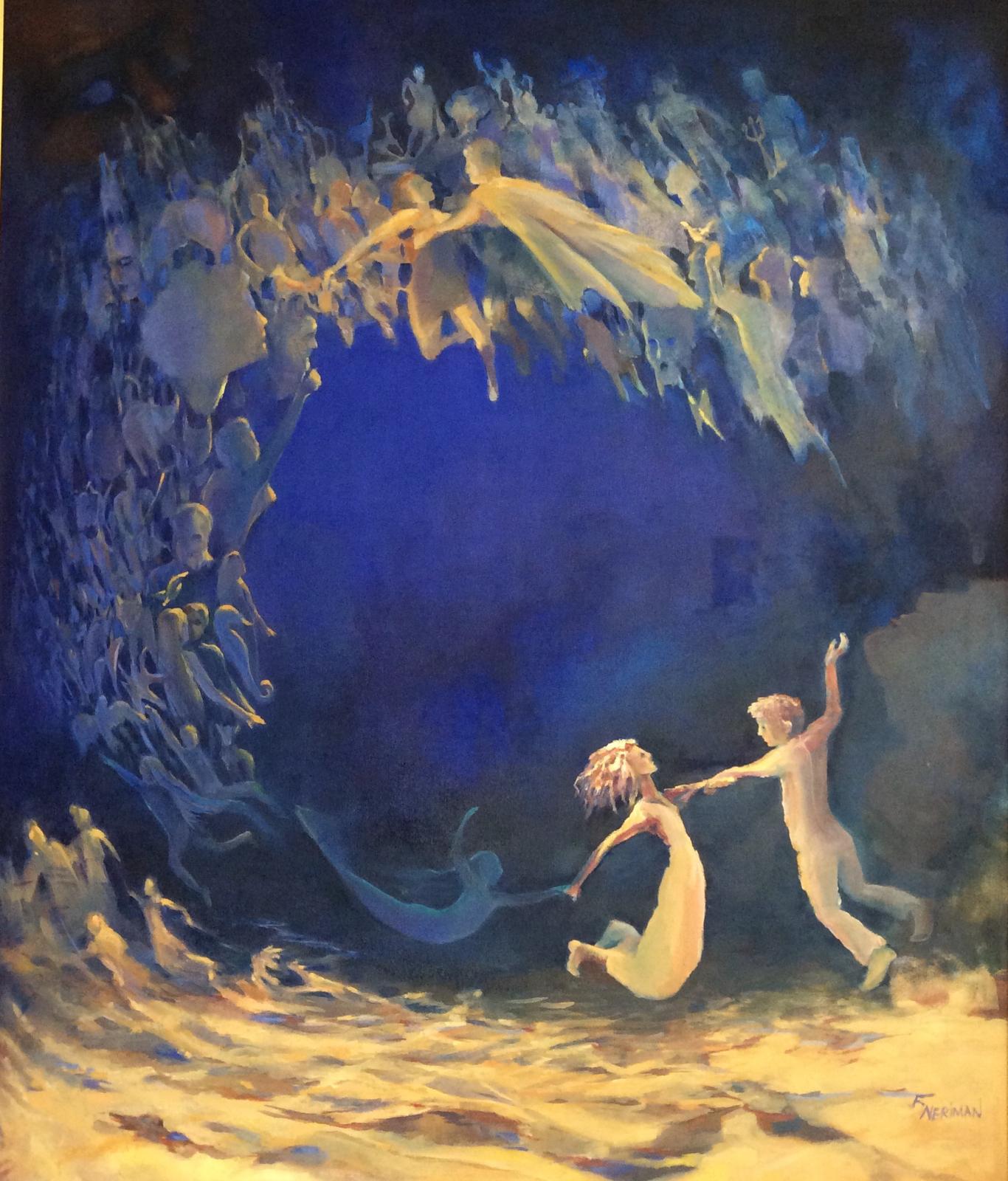
One of my bedside works that depth brought forth from long contemplations and labor I experienced
How have your international experiences shaped your understanding of originality?
I've been going to America since 2004. I've visited all the museums - LACMA, Norton Simon, all the museums in San Diego. I examined everything from Eskimo art to Indonesian art, from African art to Chinese and Japanese art one by one. After these examinations, I grasped that the most important thing is to be original. Having a style is very important and I try to protect that style of mine, even though I get bored sometimes.
Gallery Management and Art Market: A Bitter Experience
You founded Pura Art Gallery in Caddebostan in 1996. What drove you to take that step?
I graduated with a 250-page master's thesis: 'Factors Directing Turkish Painting Art Today.' My professor said that each chapter of this thesis could be a master's thesis in itself. I went into gallery management to put this knowledge into practice. I organized eight exhibitions that season, I opened exhibitions for valuable names from Basri Erdem to Hamit Görele.
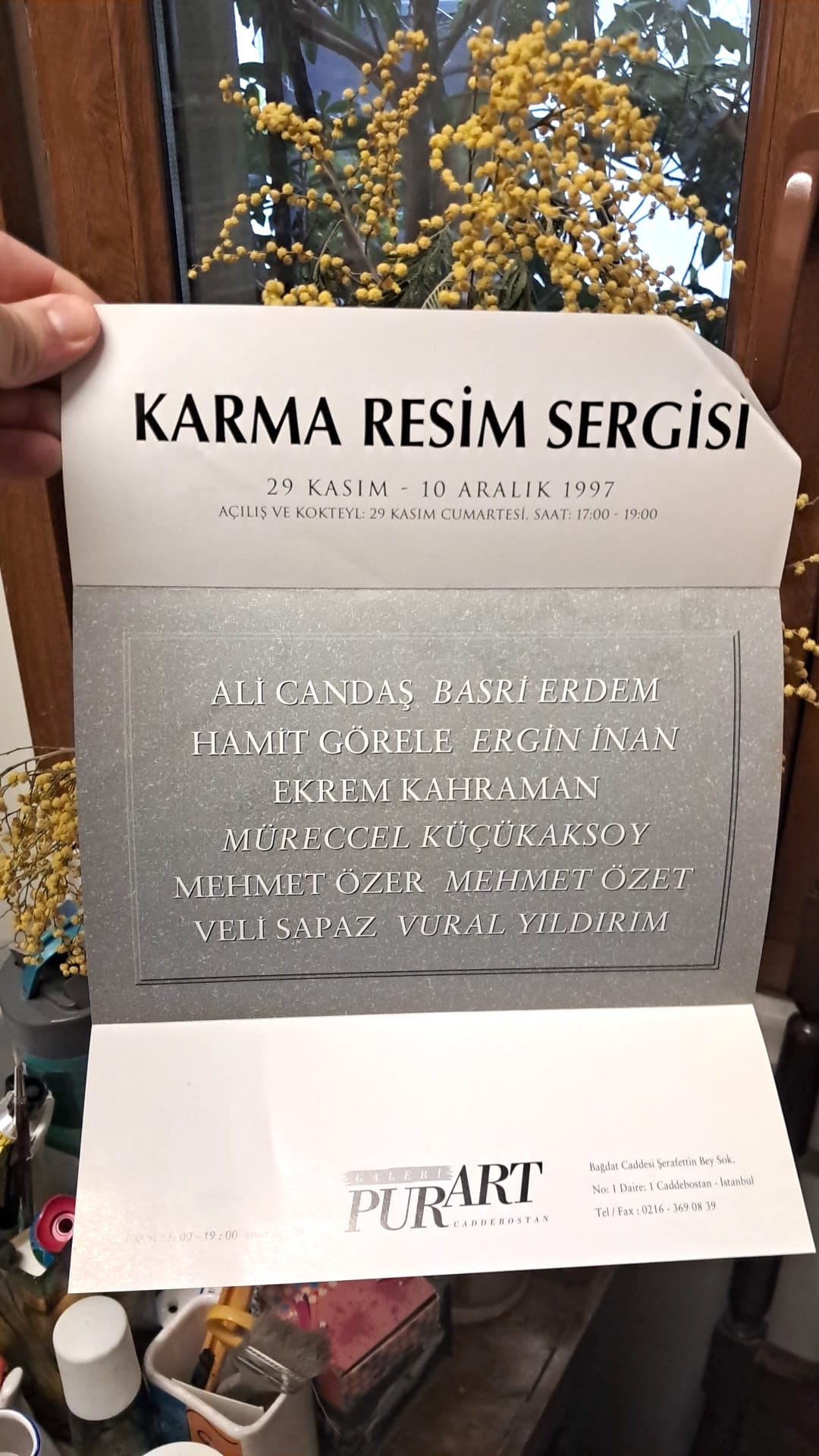
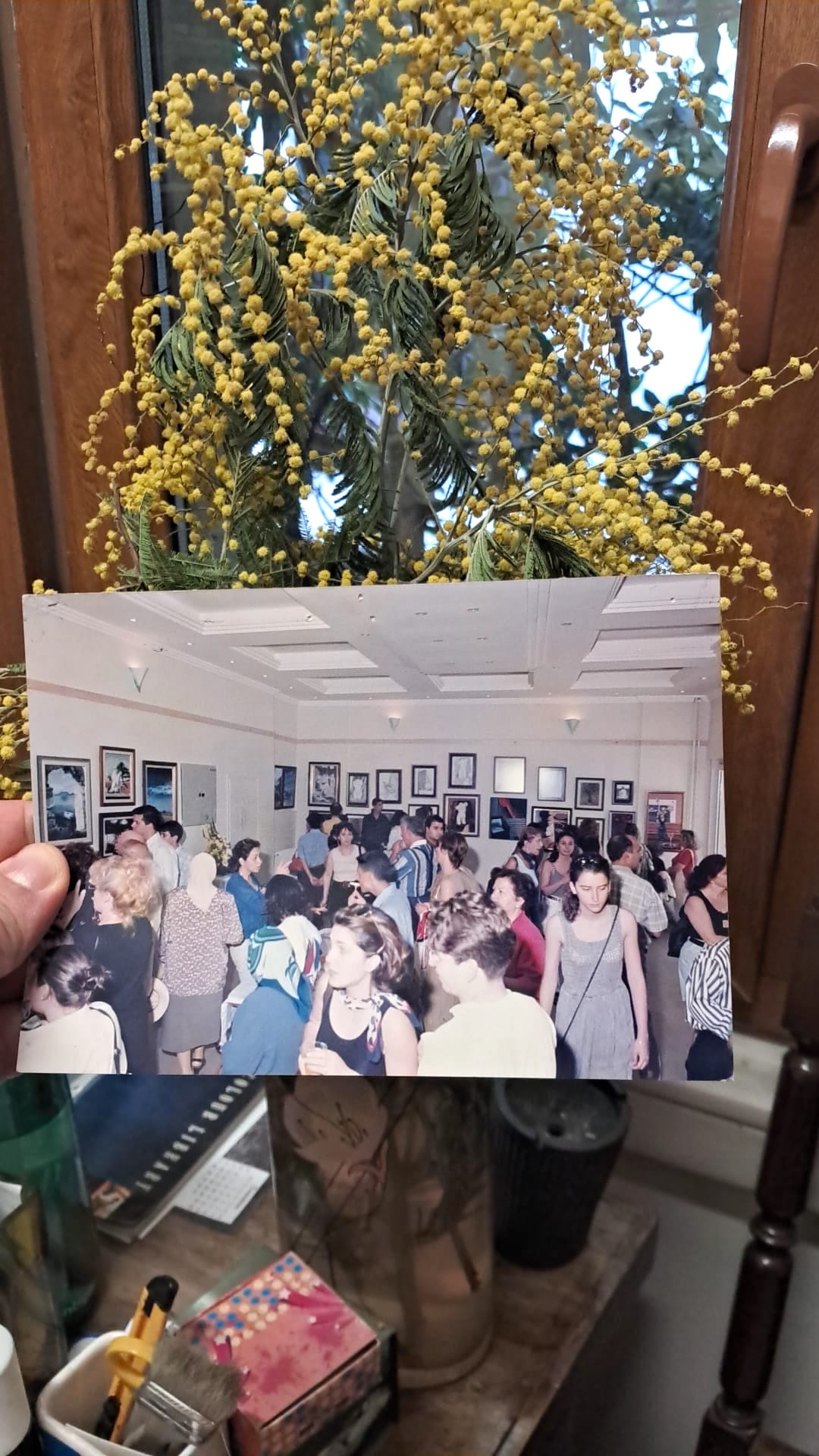
Art is like a magical and paradise-like area that I live in.
The River of Art: No More Big Ships
Can a new art movement emerge anymore?
I don't think it can emerge anymore. In the digital world, everyone sees everyone else's work and makes something slightly different. Think of it like water flowing in a big river: in the past, big ships used to sail, they were followed from behind. Those ships were movements. Now it's not like that; small little things, fifteen-second, six-second pieces flow by. New ones come out, disappear and go. The era of big ships is over. What's important is being able to catch what's different from what's been done.
Art in the Digital Age: Finding Its Value
How do you view art sharing and sales on digital platforms?
Nowadays it's not really possible to stay away from digital. I applaud those who can do it well. But appearing everywhere, coming out... This is like falling into a trap. Art shouldn't be ignored. I don't reject digital, but I want it to find its value. The value of art shouldn't be worn down, it shouldn't be diminished.
What Makes You Take the First Step?
What gets you moving when starting a new work?
Color. It's always color that first gets me moving. Then the mind withdraws. Only hand and eye remain. I go through the canvas, there's no apple or anything; emotions begin and the painting starts making itself.
Neriman Şairoğlu is an artist who has not only produced art but has infused it into every cell of her life. Through her teaching, she has paved the way for dozens of artists, never compromising on her own original language. She continues to oscillate between the fire of red and the silence of black — just like the third dimension visible behind the canvases she tears, in pursuit of infinity.
© Collecist – Discover art here. collecist.com