
Those Above Our Eyes - Ali Altınel
2026-03-03 – 2026-04-02
The Memory of Geometry: Ali Altınel's Perceptual Abstractions
Remember the first second when you look at an object. Before the details become clear, that raw image the mind records that fragile moment when silhouettes, color masses and proportions lean against each other. Ali Altınel stops exactly at this point: at the threshold where seeing begins but identification has not yet been completed.
Altınel, who translates the knowledge of proportion, rhythm and spatial balance gained from architectural education into the intuitive language of plastic arts, transforms suprematist and geometric abstraction into a tool for his perceptual memory research. The sharp edges, clashing color planes and flat surfaces we encounter in his canvases may seem to indicate rigid formalism at first glance, but beneath each composition, familiar silhouettes of the concrete world work silently: fish stuck in a pelican's beak, sailboats gliding in the bay, a garden chair under a sun umbrella, or autumn leaves turning red by the creek.
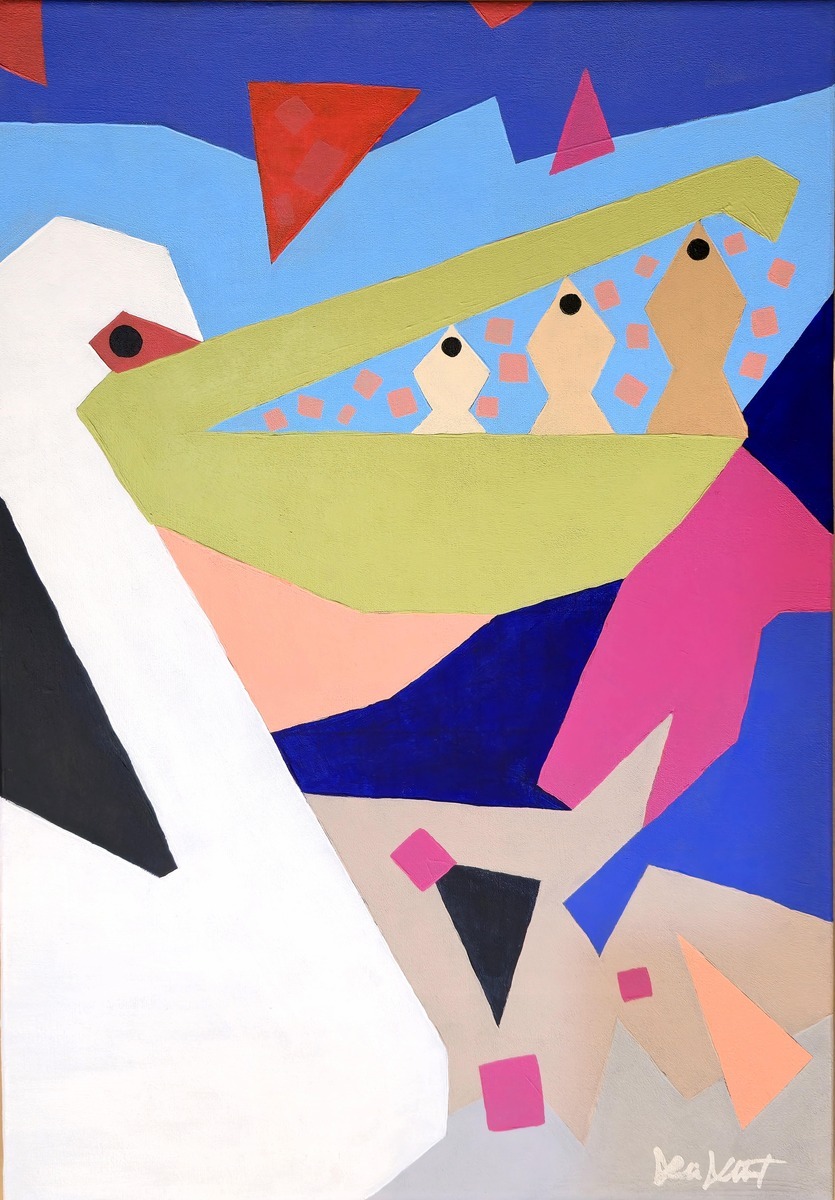
In the Fisher series, a pelican beak abstracted in yellow-green tones centers the canvas. The three fish figures in the beak with beige and cream diamond forms offer one of the purest translations of figurative reality into geometric language. The surrounding dark blue, red triangles and pink squares function as impressionistic correspondences of sea, sun and wind. The artist's sharp edge transitions, influenced by collage aesthetics, make you feel that the image is not an instant photographic frame but rather a scene reconstructed by memory.
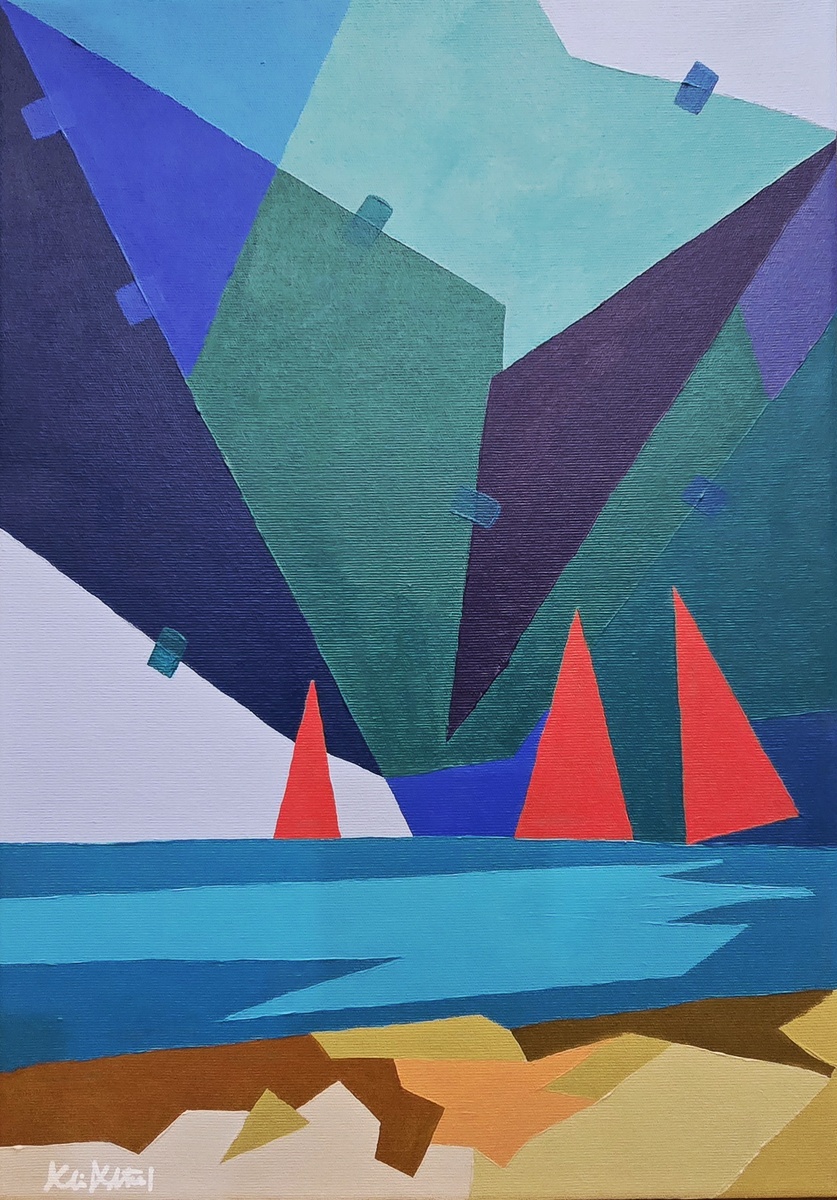
In the Sails work, the depth illusion of blue-green tones flowing from shore to open sea is broken by three red sail triangles. The upper layers evoking sky and mountain masses, and the lower layers evoking sea surface and coastal sand, constitute one of the clearest examples of the "intuitive reading" that Altınel mentions. The viewer recognizes the landscape through the habits of the eye, without conscious analysis.
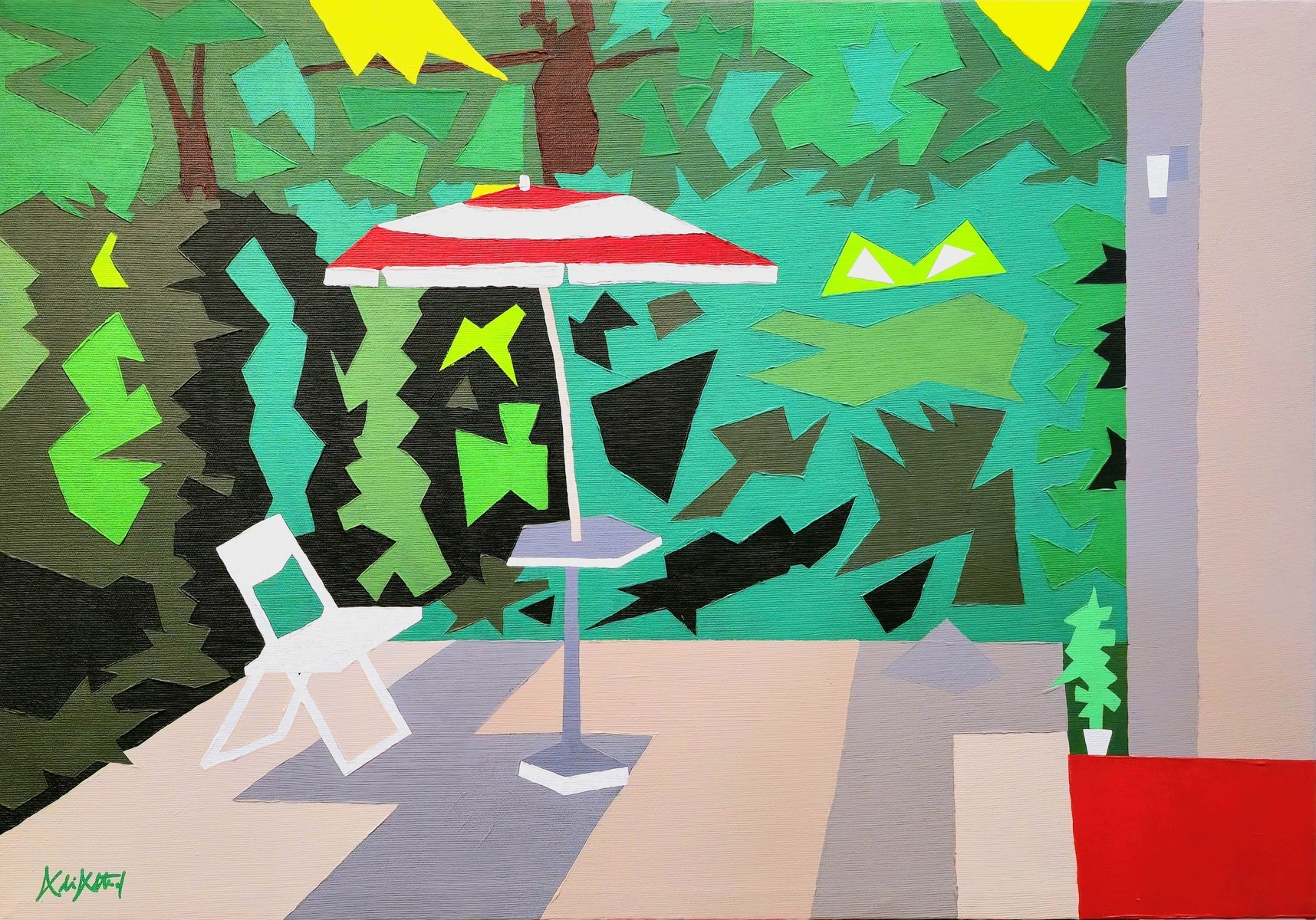
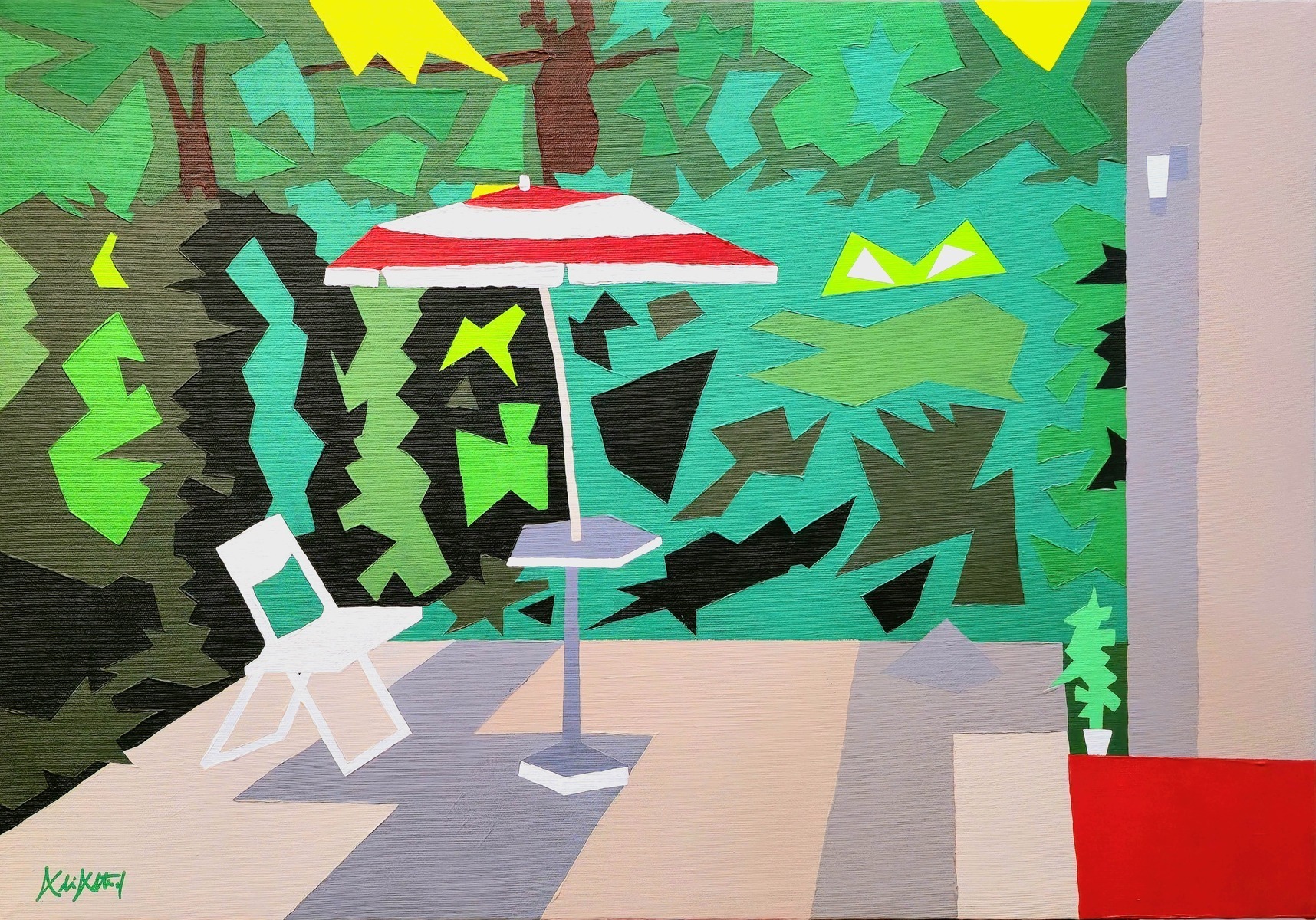
The work titled Next Stop breaks down one of the most ordinary moments of daily life a chair in the garden, a sun umbrella, light filtering through greenery into sharp geometric fragments. The weaving of leaf forms with dozens of different green tones shows the artist's preference to multiply the color diversity in nature rather than reducing it to a single pigment. The red-white umbrella, as the only regular form within this green chaos, forms the focal point of the composition.
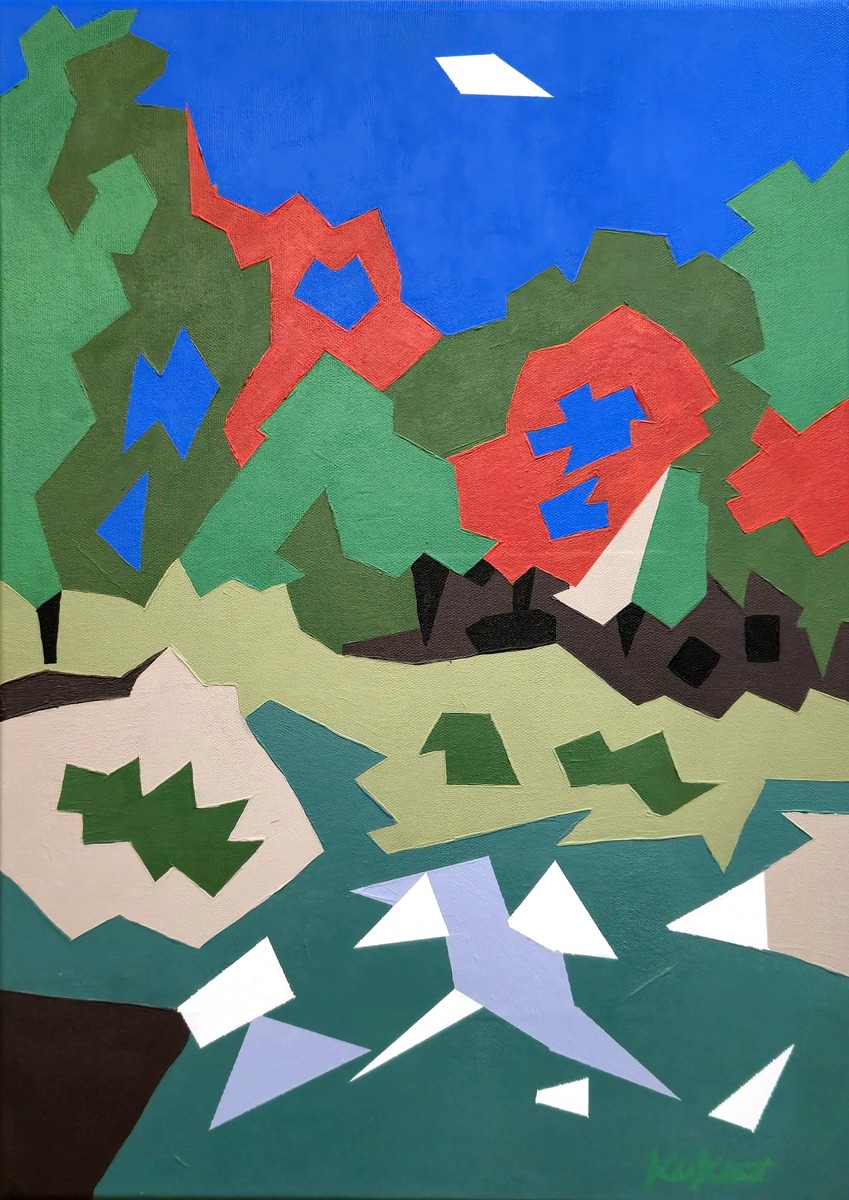
Nature is perhaps the most lyrical work of the series: a grove with red flowers, a rocky creek bed and reflections sparkling in the water. Here, geometry dialogues with nature's organic chaos rather than disciplining it. The white and gray triangles in the lower layer evoke the water surface, while the green-red fragmentation in the upper layer deliberately blurs the boundary between leaf and flower.
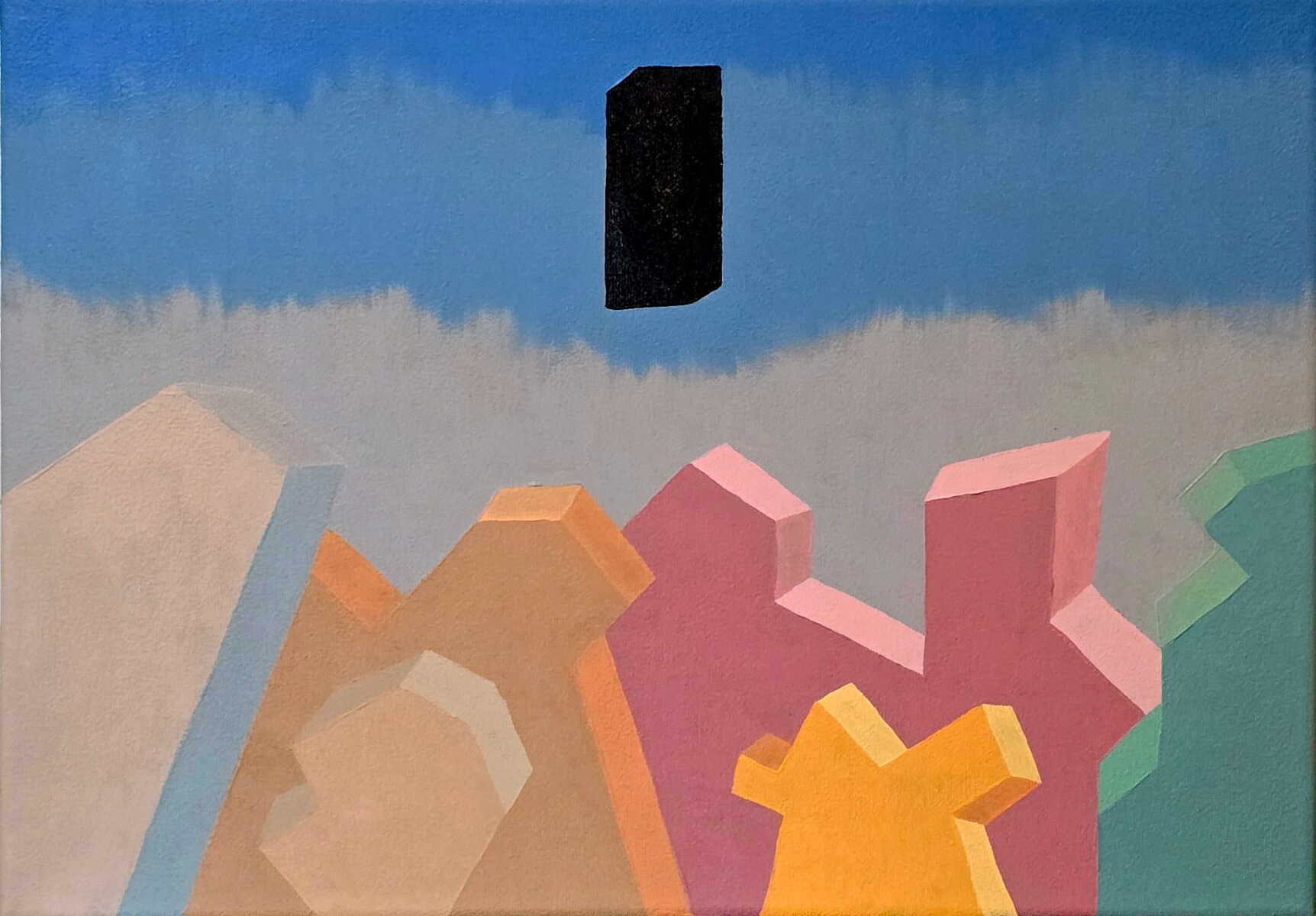
Odyssey The black monolith hanging in the sky becomes a silent call rising from among pastel crystals; here Altınel brings together Kubrick's iconic image with architectural mass relationship on the same plane, creating tension at the threshold of the known and unknown.
Altınel's production occupies an original position that systematically investigates the relationship between memory and perception in contemporary Turkish abstract painting. The works deserve to be read not only as aesthetic abstractions, but as interdisciplinary fields of thought where architectural thinking intersects with plastic sensibility.
Collecist Editorial Desk
Follow Ali Altınel on Collecist: collecist.com