
Degeneration
TR
₺ 45,000
Barış Gülen' More From
Wrong Place..
21.5 x 14.5 x cm
Barış Gülen
₺ 35,000
Sleepless Dreams..
30 x 30 x cm
Barış Gülen
₺ 35,000
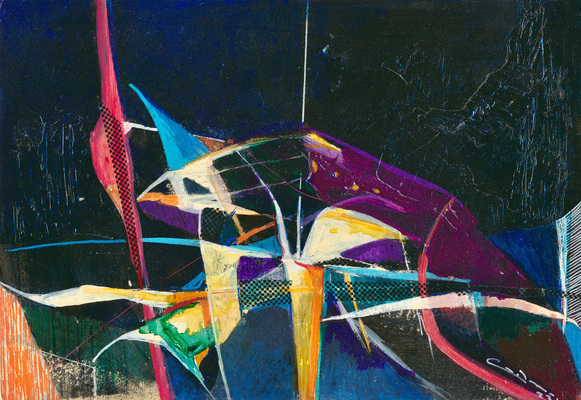
I'm Happy in My Shel..
21.5 x 14.5 x cm
Barış Gülen
₺ 20,000
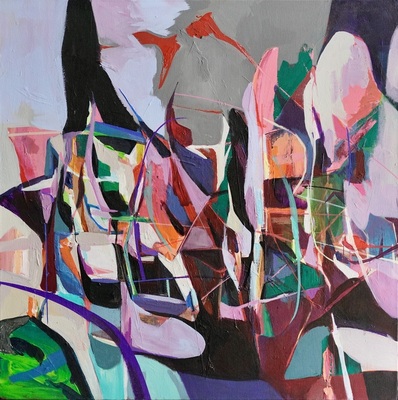
Fragmented Time..
60 x 60 x cm
Barış Gülen
₺ 50,000
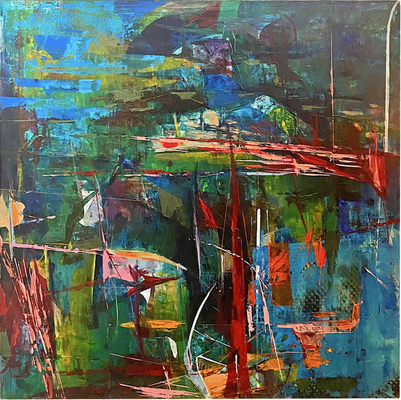
Looking at Istanbul..
60 x 60 x cm
Barış Gülen
₺ 90,000
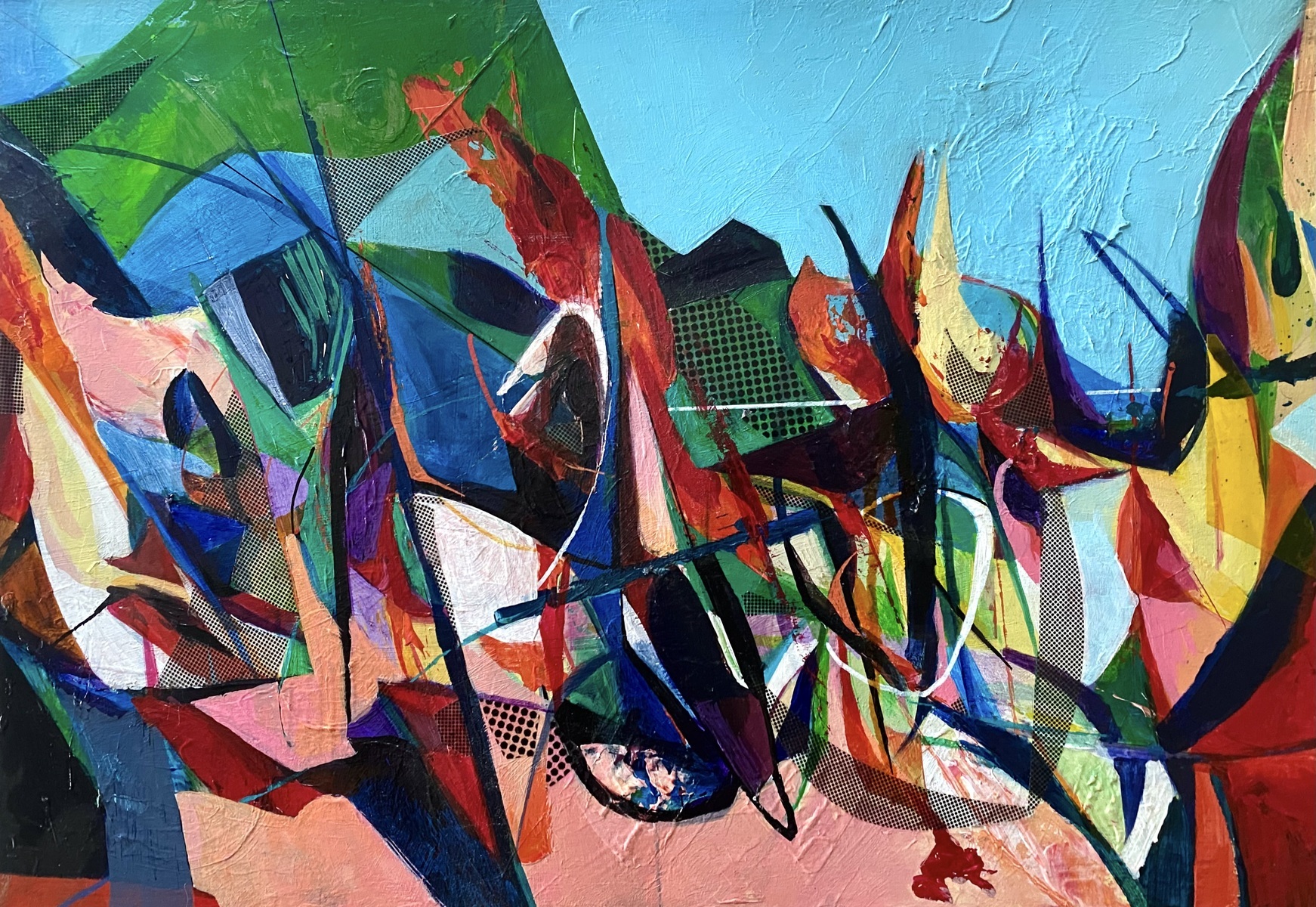
Degeneration is a conceptually bold composition produced in mixed media and acrylic in dimensions of 50×35 cm, balancing the weight of its title with visual vitality.
The title carries scientific, medical, and social connotations. Degeneration means a deterioration, a dissolution, an erosion of a system from within. But this work presents degeneration not as a dark or hopeless process; rather as a chaotic, colorful, and paradoxically creative transformation. Perhaps the real question is this: how much life exists within something that is breaking down?
The light blue and green area at the top answers this question immediately. The bright turquoise ground and the vivid green masses in the left corner suggest that even in the midst of degeneration, the sky remains open, that nature persists. This upper area brings an unexpected openness and light to the composition; as if above the decay there is still a space where one can breathe.
In the middle and lower sections, degeneration itself becomes visible. Red, navy blue, pink, purple, and black forms intersect, repel, and transform one another. No form has managed to retain its full integrity; everything has been fragmented, distorted, or left incomplete. But this fragmentation is not a deficiency — it is the inevitable appearance of transformation, much like how degeneration in biological processes opens the way for new forms.
Halftone texture areas take on a particularly meaningful function in this work. These print dots appearing on the green and white ground point to the digital and mediatic dimension of degeneration — pixelation, data corruption, the loss of a screen's resolution. The degeneration of our age is not only biological; it is also an erosion occurring at the level of information and attention. This textural layer opens the work not only to a bodily inquiry, but also to a social one.
The free movement of black curves and sharp forms throughout the composition visualizes the way degeneration spreads — a systemic dissolution extending in every direction, recognizing no boundaries. Yet these black forms do not destroy; on the contrary, they make the colors beneath them more visible, frame them, and paradoxically render them precious.
Degeneration insistently argues for the beauty within deterioration and for deterioration being not an end but a transition. The work unsettles the viewer but does not abandon them; it chooses to reveal the colors gleaming within that discomfort, to point to the life beneath the ruin. And perhaps its most powerful message is this: every degeneration is at the same time a harbinger of regeneration.
Similar Artworks
Micro Loop..
36 x 26 x cm
Elif Zaim
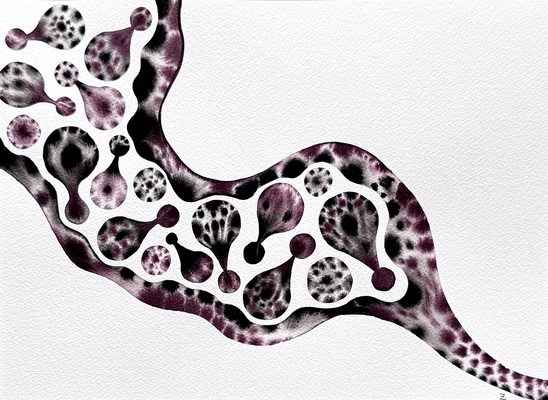
Reproduction..
36 x 26 x cm
Elif Zaim
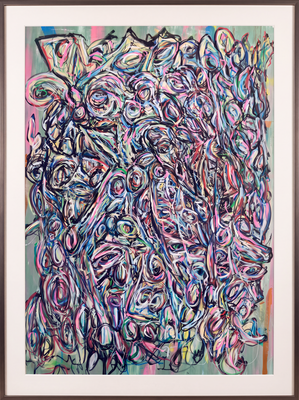
Pink Forest..
70 x 100 x 0.04 cm
Ekim Mağden
₺ 50,000
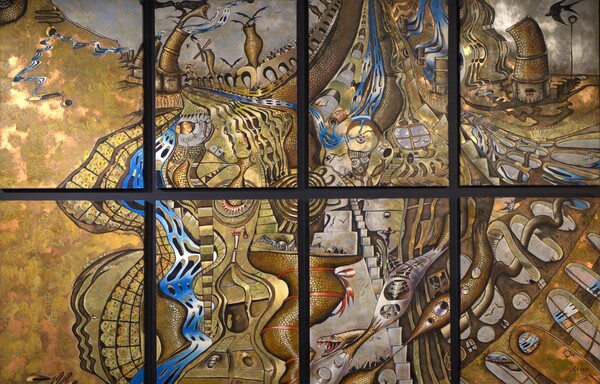
The water flows find..
240 x 160 x 5 cm
Erol Yıldırım
€ 70,000
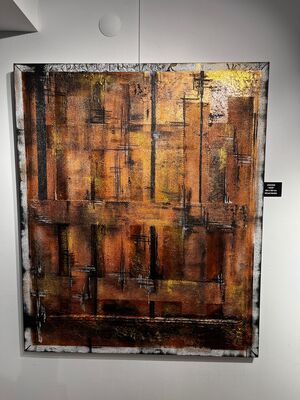
Lessons..
100 x 120 x cm
Merve Uçar
₺ 40,000