Culture

Image is Not Property Current

Image is Not Property

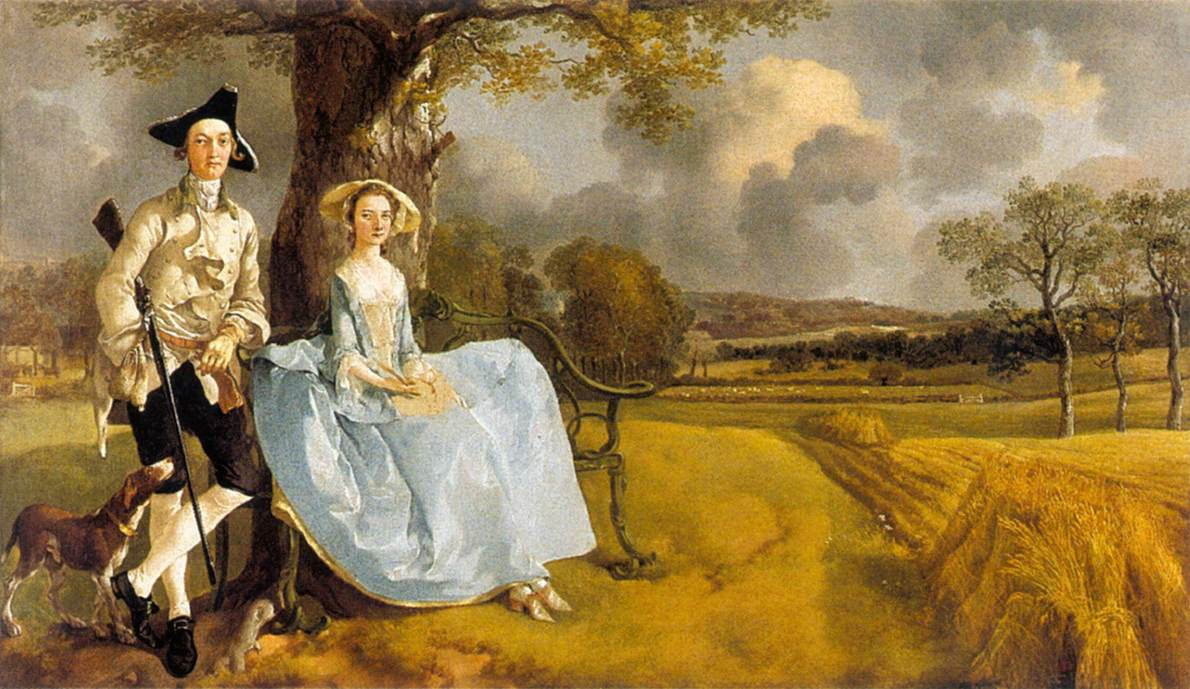
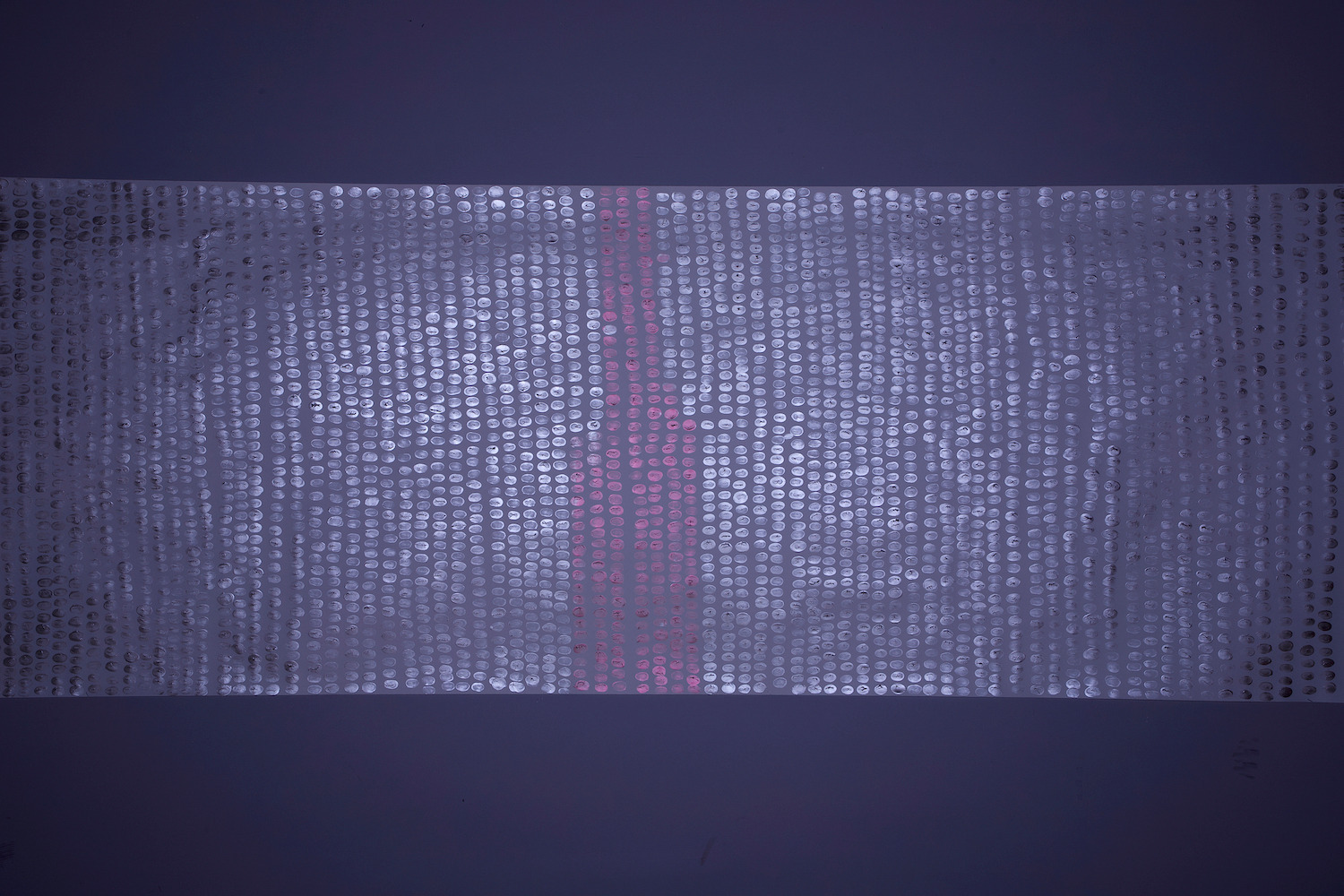
An art note on material, property and seeing When looking at a painting, we think we know what we're looking at: a face, a landscape, a bowl of fruit. But what we're looking at is also what it's made with. Material stands silently beneath the image and often says more than the image itself: who made it, with what means. We hardly notice this because we consider material natural. But material is a choice; often also a necessity. Let's look again at the Gainsborough on this page's cover, Mr and Mrs Andrews. For years we read this painting like a nature depiction: a couple sitting under a tree, with a luminous English countryside behind them. John Berger, in Ways of Seeing, disrupts this comfortable reading — the painting depicts not nature, but property. The Andrews couple stands not within the landscape, but in front of the land they own; their posture, their gaze, that rifle under the chair, all are declarations of belonging. And it's not just the pose that says this; it's the material itself. Because for centuries, oil painting was the painting of the tangible. It could show the shine of fur, the coldness of silver, the weight of flesh; it made objects almost graspable. In Berger's words, oil painting was the language of things that could be possessed: to paint something with it was, in a way, to acquire it as property. This is why large canvas, thick paint, expensive pigment was never just material; it was a boundary that predetermined who could produce images. Now let's cross to the other side of the boundary. Recently, in an open call, a painter described, in an almost cheerful tone, how they couldn't afford paint for large canvases. They had reduced the canvas size; now they make tiny, black-and-white works, finishing the incomplete parts of the painting with embro...

When Does Art Turn Into a Show? Current

When Does Art Turn Into a Show?

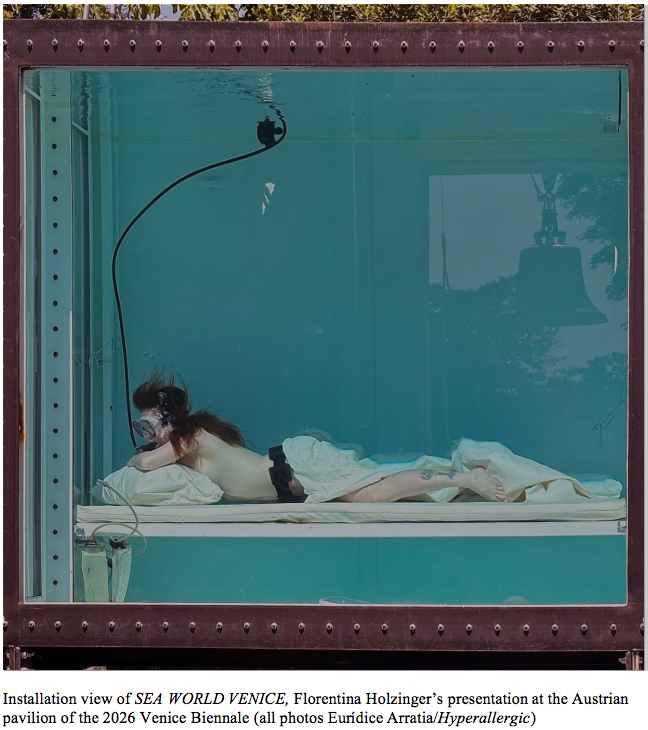
From aesthetic revolution to experience economy: the dilemma of the biennial age When we look at Eugène Delacroix's painting Liberty Leading the People today, we don't see just a revolution. We see a threshold. The moment when one aesthetic regime tears through and enters another aesthetic regime. In the foreground there are corpses. There is dirt. There is the street. There are scattered bodies. ...

Fur Chrome Current

Fur Chrome

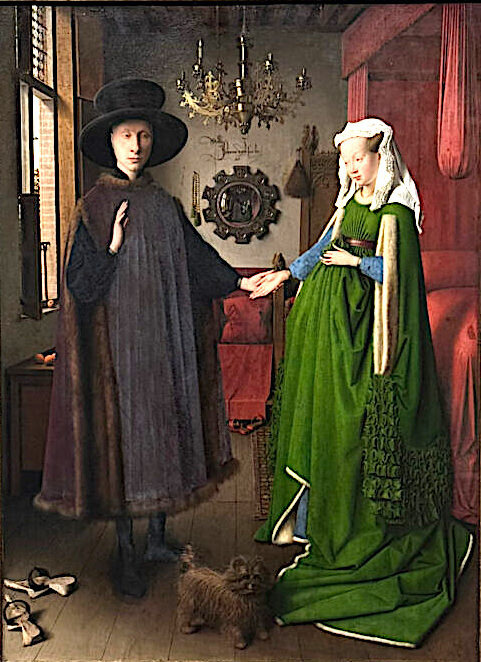
An eight-hundred-year class journey of a dog. Once upon a time, there were small, furry dogs standing at the feet of ari...

Art Fed Me Enough Sunflowers Current

Art Fed Me Enough Sunflowers

In the morning, I got up before at least the roosters in our neighborhood started crowing. More accurately, my body got ...

Possibility Current

Possibility

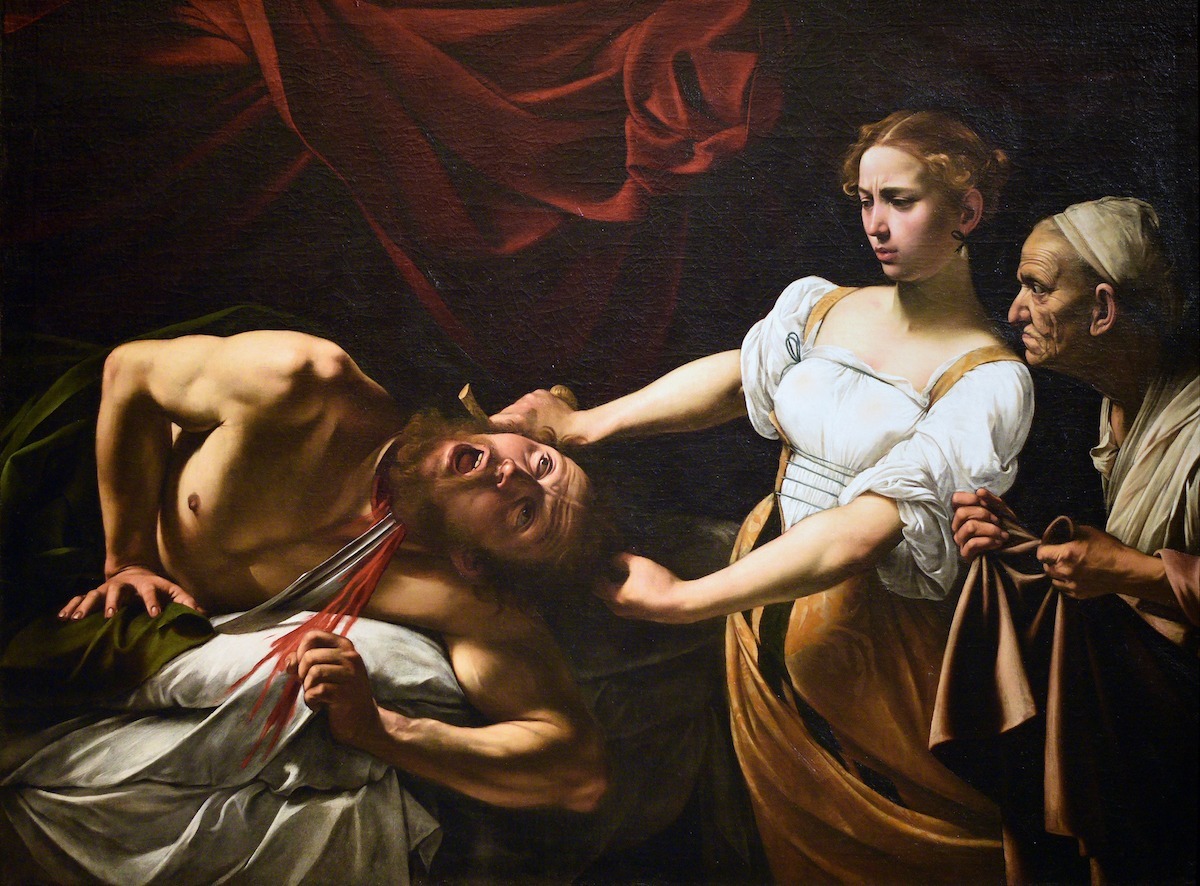
Possibility Why can no one else ever dwellin the artist's ego? There is always a strange tremor in one artist's gaze upon another. Admiration, jealousy, curiosity - often all of these live simultaneously within the same look. And calling this tremor "jealousy" leaves it incomplete, because what happens here is something more definite: the artist does not envy another artist. They envy the possibility of being replaced. This distinction may seem small, but it changes everything. Jealousy is an emotion, possibility is an existential threat. And faced with this threat, the ego produces very different reactions - often production, sometimes violence, sometimes both at once.   The ego needs a mirror to define itself. Another artist is the closest and most dangerous version of that mirror because they work with similar material, similar claims. But the mirror is dangerous because it reflects wrongly. The reflection that a great artist's ego expects is clear: I am here, I am central, my style is the form that art can take. Another artist disrupts this reflection. They too have a style, they too have claims, they too have an audience. And the most unbearable thing: perhaps tomorrow, their work will replace yours. This concrete possibility is the ego's real enemy.   Caravaggio's oil painting from the 16th century AD, depicting the handsome young Narcissus from Greek mythology falling in love with his own reflection. (Galleria Nazionale d'Arte Antica, Rome) The artist does not envy another artist. They envy the possibility of being replaced.     History is full of artists who struggled to live with this possibility. Michelangelo openly humiliated Leonardo in front of a crowd  the pretext was an unfinished horse sculpture, but the real issue wasn't technical. Leonardo's existence...

AESTHETIC POLLINATION Current

AESTHETIC POLLINATION

In the noise of the visibility economy, confronting history is not a choice; it becomes a condition of aesthetic survival. In art history, influence has never been mere imitation. When the Romans revived Greek mythology, when Renaissance masters internalized the ancient sculptural canon, or when Picasso repeatedly reinterpreted Velázquez's Las Meninas, what was at stake was not the copying of a s...

Where Light Never Ends: David Hockney and the Freedom of Seeing Current

Where Light Never Ends: David Hockney and the Freedom of Seeing

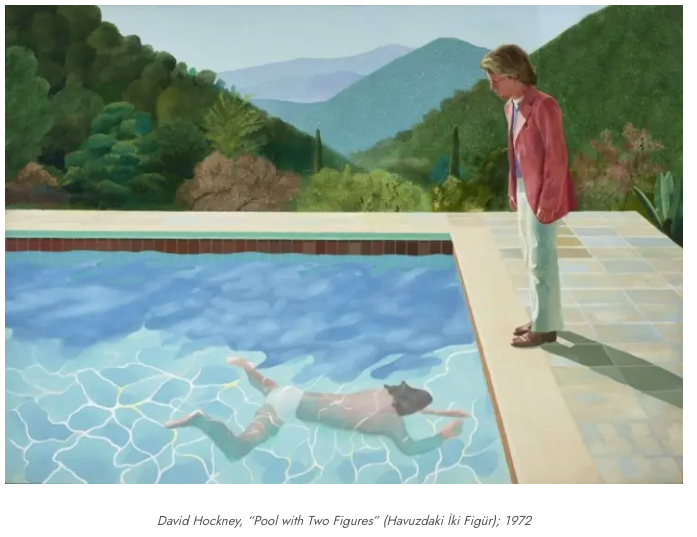
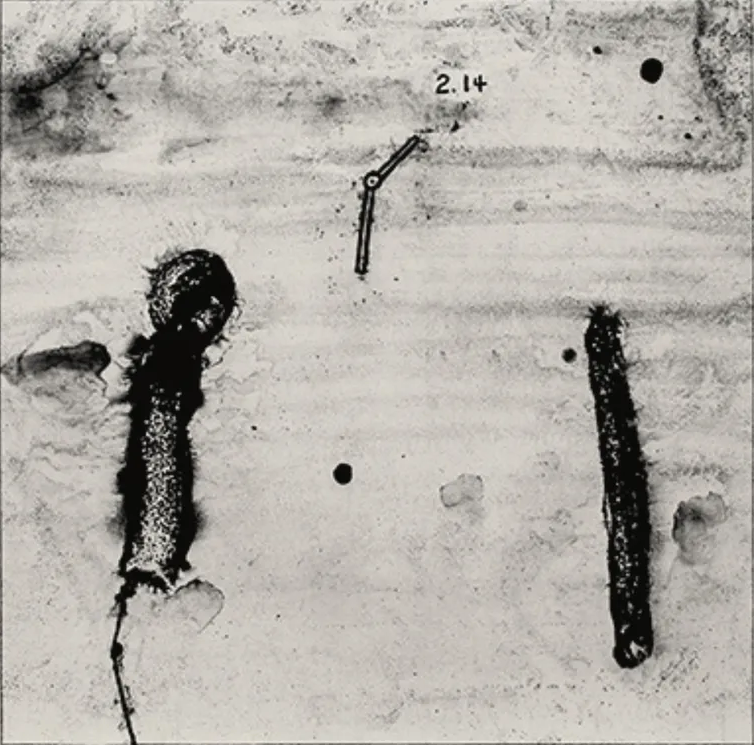
Where Light Never Ends: David Hockney and the Freedom of Seeing   David Hockney never reduced art to a mere market object. Pools, light, human faces and Yorkshire's rainy hills - all of these were, for him, declarations of freedom. Hockney's story is the portrait of an artist who didn't fit into the system and wrote his own rules.   The early 1960s were years when the art world was shaped in the shadow of abstract expressionism. The massive canvases of Mark Rothko and Jackson Pollock had occupied museum walls and art critics' agendas. Color and form were sufficient; the human figure was almost considered a sin. Hockney did not bow to this pressure. While the majority of his peers at the Royal College of Art turned to the abstract, he walked in the opposite direction. "I consciously chose to abandon abstract expressionism and return to the figure," he said. This decision was an expression not of his career, but of his identity; and Hockney never looked back from this decision. The Love Pictures series that emerged during this period was not merely a poetic expression of homosexual desire. Lines from Walt Whitman, graffiti copied from subway toilets, numerical codes and scribbled symbols — all of these were the secret alphabet of an artist challenging the system. The "3.18" in the painting "Doll Boy" or the number "138" in "Hairy Legs" were not just riddles; they were the only safe form of revealing an identity that was considered criminal at the time. When Hockney first set foot in Los Angeles in 1963, he found himself there. This is not an exaggerated expression; it's a biographical fact. After Bradford's gloomy weather and London's competitive art environment, California offered him a world that made color, light and open identity possible. Poo...

Current

"Is it Emin or Munch, Or is it the Same Scream?"

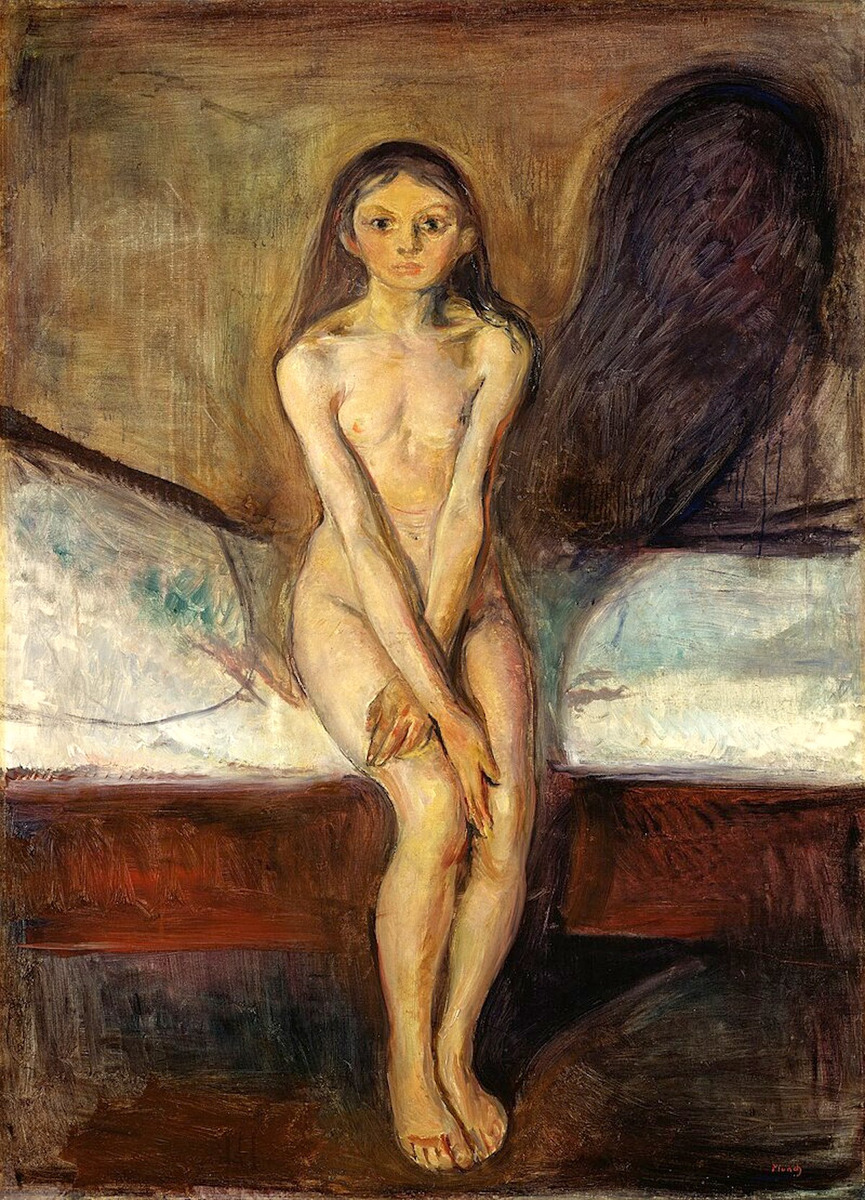
"Is it Emin or Munch, Or Is It The Same Scream?" Can two artists touch the same wound a century apart? There are some artists who make you uncomfortable when you look at their works. You want to look away but you can't. Tracey Emin and Edvard Munch create exactly this effect  one from the cold fjords of Norway at the beginning of the twentieth century, the other from twenty-first century Lo...

On the Forms of Returning Current

On the Forms of Returning

On the Forms of Returning Let us think of a small plant branch that has shed its leaves in autumn.Its trunk is still upr...

When the Gaze Closes: Medusa's Silence Current

When the Gaze Closes: Medusa's Silence

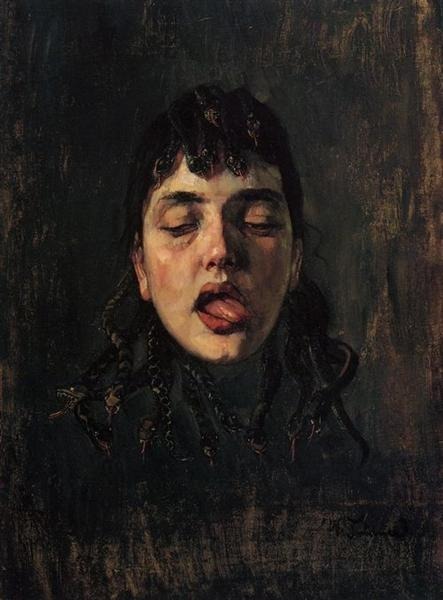
When Medusa closes her eyes, the loudest moment of the myth also falls silent. Neither screaming remains nor a stone-cutting gaze. The woman's head we encounter in Wilhelm Trübner's 1891 work titled A Gorgon Head (Gorgonenhaupt) stands not at the peak of terror; but at the threshold of silence. Her tongue protrudes slightly, her hair coils like snakes in a dark and atmospheric void; but these coils do not attack, do not threaten. In this moment when the gaze is closed, Medusa is no longer the monster of the myth, but becomes a face that bears the weight of the narrative. What falls to the viewer is not to look at her; but to be left alone with their own gaze in her place. Medusa, or in her suppressed form with her name erased, Melissa, has been the object of systematic distortion in mythological narrative for centuries. The punishment by Athena of a woman who suffered Poseidon's violence; the tearing of guilt from the perpetrator and loading it onto the body, face, and gaze, is the fundamental lie of the myth. Medusa's transformation into a monster is the product of power's memory, not justice's. Trübner's painting does not scream against this memory; it dissolves it from within. The Medusa here is neither angry nor defensive. She is in a drowsy, stupefying, almost dream-like state. The slight protrusion of the tongue evokes not so much the moment of death as a suspension between consciousness and unconsciousness. This is not surrender; it is a pause that cuts through the speed of the narrative. In essence, Medusa does not look. When the gaze is closed, the viewer does not feel safe for the first time. Because when the threat is removed, only responsibility remains. In Trübner's Medusa, the snakes have ceased to be weapons. They are now carriers not of fear, but of memo...

David Lynch: The Visual Genius Who Wrote the Poetry of Darkness Current

David Lynch: The Visual Genius Who Wrote the Poetry of Darkness

David Lynch: Visual Genius Who Wrote the Poetry of Darkness In the Wake of an Artist Who Danced on the Boundaries of Reality We have lost David Lynch. But what remains is not just a legacy—it's a visual language carved into our collective subconscious, disturbing, enchanting, and equally liberating. Cinema Through a Painter's Eye Most directors shoot their films. Lynch, however, painted them. His ...

Current

Talking Alongside; Fragile Rhythm

  SPEAKING ALONGSIDE; FRAGILE RITUALS The Politics of Silence Through Time, Space and Body   In an era where the bounda...

Creating Without Objects: Can Art Exist Without Artworks? Current

Creating Without Objects: Can Art Exist Without Artworks?

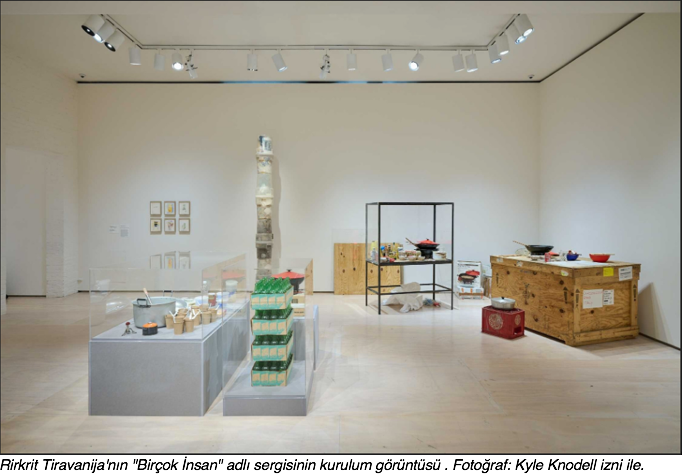
In the early 1990s, something strange happened at a New York art gallery. Thai artist Rirkrit Tiravanija completely emptied the gallery space. He set up a stove in the corner and began cooking Pad Thai for visitors. For free. No paintings to sell, no sculptures to display. The next day, the gallery was empty again, nothing remained. So, was this art? Can Cooking Be Art? Tiravanija's work revolutionized the art world. Because there was no "work" in the classical sense. There was no object to purchase. But the experience visitors had that evening, the meal they shared, the conversations they had - were these any less valuable than an artwork? French curator Nicolas Bourriaud called this type of work "relational aesthetics." According to him, art is now more about creating relationships between people than producing objects. While a painting hangs in a frame, Tiravanija's meal brought people together, made them talk, made them share. German artist Joseph Beuys said years ago, "Everyone is an artist." Perhaps this is what he meant: Creativity isn't just about hanging paintings on gallery walls. Shaping social relationships is also a form of art. The Never-Ending Manifesto In 1998, designer Bruce Mau published his famous text "An Incomplete Manifesto for Growth." Notice the contradiction in the title: How can a manifesto be incomplete? Mau's answer is sharp: "Completeness is death." When you consider an artwork "finished" and frame it, you freeze it, you separate it from life. True creativity, however, is alive, it evolves, it changes. One of the items in Mau's manifesto states: "Remember, failure also advances your career. Self-satisfaction in the face of failure is the real failure." This thinking aligns with the "happening" movement of the 1960s. Happening artis...

Has the Art World Lost Its Mind? Current

Has the Art World Lost Its Mind?

  Digital Nativeity, AI, and Collective Intelligence: A Look at the Algorithmic Future of Turkish Art. An article published in the UK at the end of the year focused on the art world's "intelligence" issues. Jenny Wu's article in ArtReview discussed the language and intelligence of the art world, from the jargon of International Art English (IAE) to AI-generated press re...

From Fire to Wind Colage

From Fire to Wind

From Fire to Wind: JiSook Jung's Ceramic Sculptures Bring Elements to LifeJiSook Jung has become a significant focal poi...